
The light was bad. The kind of gray, flat, late-afternoon-in-November bad that makes every photo look like it was taken through a fogged-up window. We were three hours into a shoot, the subject was exhausted, the location had turned out to be half what we’d imagined, and we had maybe forty frames worth keeping.
We got back, opened the laptop, ran the selects through editing software, and then — almost by accident — pulled up one of the new AI generation tools that had been sitting in browser tabs for weeks. Just to see.
Twenty seconds later it showed us a version of the same scene. Perfect light. Dramatic sky. The kind of frame that would get 30,000 likes before breakfast.
And we sat there feeling something we didn’t expect. Not awe. Not fear. Just… tired. And then, slowly, something sharper.
That’s not what happened.
That’s the center of this whole conversation about AI and photography. Not the technical question of whether AI images look good — because honestly, sometimes they look great. The question is what we’re actually trying to do when we pick up a camera.
The Thing We Keep Getting Wrong About This Debate
Here’s the deal: every time a new tool arrives in photography, the death notices go out. Digital threatened to kill the soul of film. Lightroom presets threatened to make everyone’s work look the same. Phone cameras were supposed to make “real” cameras obsolete. Instagram was going to commoditize editorial photography into oblivion.
None of that happened. Not cleanly, anyway. The craft evolved. Some things got worse. A lot of things got better. And the photographers who were paying attention used the disruption to figure out what they actually believed about their work.
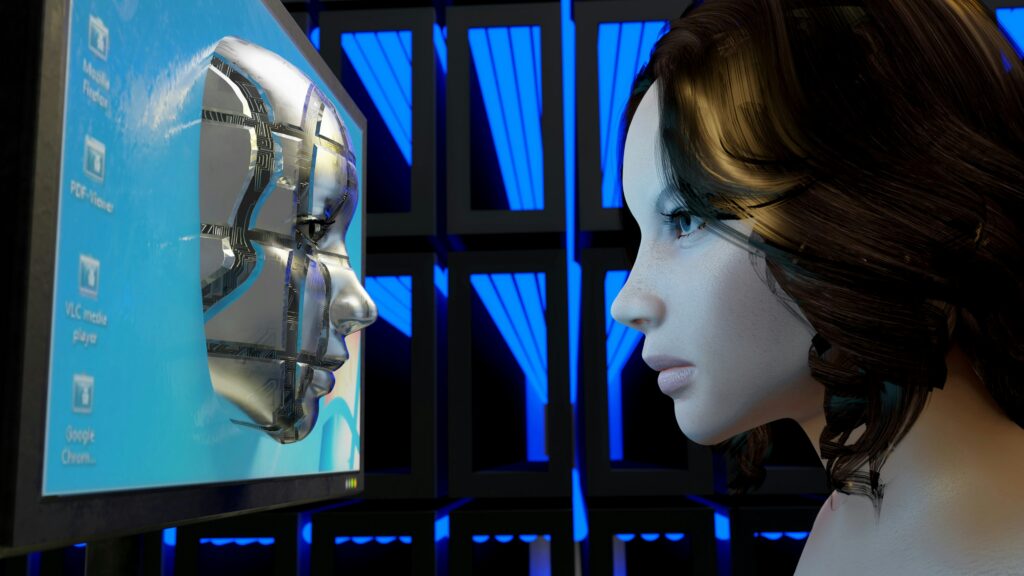
AI is a bigger disruption. Let’s not kid ourselves about that. The tools are more capable, the gap between “generated” and “shot” is closing faster than anyone predicted, and the commercial implications are genuinely unsettling for a lot of working photographers. Stock photography is already in freefall — Kaptur documented the revenue erosion in sharp detail, and the numbers are not pretty. Certain categories of advertising imagery — product shots, lifestyle composites, generic editorial backgrounds — are being absorbed by AI pipelines with alarming speed.
That’s real. That’s not panic. That’s just the market.
But “AI is disrupting certain commercial photography workflows” is a very different sentence than “AI is killing photography.” And conflating the two is making people more scared and less useful than they need to be.
And if you want proof that the industry is still investing hard in physical cameras — not retreating from them — the camera releases coming out of 2025 tell a pretty clear story. Manufacturers aren’t acting like photography is dying. They’re acting like it’s changing. There’s a difference.
What AI Is Actually Good At (And Why That Should Clarify Things)
Alright, let’s be honest about what AI does well, because we think it actually clarifies things.
AI is excellent at generating technically proficient, emotionally neutral images. It can produce a thousand variations of “woman smiling at laptop in bright office” without breaking a sweat. It can synthesize visual styles it has been trained on — golden hour, moody documentary, high-fashion editorial — with enough accuracy to fool people who aren’t looking closely.
What it cannot do is be somewhere. It cannot wait. It cannot build trust with a nervous subject over the course of an afternoon. It cannot make a decision in a fraction of a second that reflects two decades of understanding what makes a moment worth preserving.
A photographer we talked to — she shoots documentary work in rural communities, the kind of long-form projects that take years to build access for — shared something that stuck. She said: “AI needs a prompt. My work needs permission. Those are not the same thing.”
She’s right. And that distinction matters more than any technical comparison.
The photography that AI threatens most directly is work that was already kind of generic. Work that existed to fill space efficiently, not to say anything specific. That’s not a brutal verdict — it’s just accurate. If a piece of work could be described to an AI in a sentence and reproduced convincingly, it was probably already on the commodity end of the spectrum.
What AI Means for Your Gear (And Your Next Purchase)
Here’s the angle that doesn’t get talked about enough. AI isn’t just changing what photographers make — it’s actively reshaping what gear gets built, how quickly it gets upgraded, and what happens to everything left behind in the cycle.
Camera manufacturers are in an AI arms race right now. Subject detection, eye-tracking autofocus, computational exposure — these features are being crammed into new bodies at a pace that would have been unthinkable five years ago. Every major release in 2025 and into 2026 has AI baked into the autofocus system as a baseline, not a premium. The camera technology trends taking shape for 2026 reflect exactly this: cameras are being engineered as integrated systems now, not just optical instruments.
Which creates a real question for working photographers. If AI autofocus is now table stakes on entry-level bodies, does that change whether you actually need to upgrade?
Honestly? For a lot of photographers, no. Fstoppers made the case bluntly: the spec race has created cameras that are simultaneously more complex and less precise — and the photographers who opt out of chasing numbers tend to shoot better for it. More megapixels, more autofocus points, more AI features. More noise. Less clarity about what actually matters.
If you’re working with a body from the last three to four years, the AI-driven autofocus improvements in the newest generation are real — but they’re incremental, not transformational. The Sony A7 V debate is a good case study — a genuinely impressive camera, but whether the upgrade makes sense depends entirely on what you’re actually shooting and how much the edge cases in your work would actually benefit.
The more interesting effect of the AI feature arms race is what it does to the used gear market. Every wave of AI-hyped upgrades pushes capable, well-maintained bodies into the secondary market. Photographers chasing the latest subject-detection algorithms are selling off Sony A7 IVs, Canon R6 Mark IIs, and Nikon Z6 IIIs that are objectively excellent cameras — at prices that reflect upgrade anxiety more than actual depreciation in value. PetaPixel put it well in their year-end roundup: mid-range cameras have never been this good, and most photographers who upgrade aren’t doing it because their current body failed them — they’re doing it because the marketing made them feel like it did.
That’s genuinely good news if you know how to read the cycle. Buying and selling used gear has never been smarter than it is right now — and a lot of that has to do with the fact that AI hype is driving upgrade decisions that the actual work doesn’t always require.
There’s one more gear implication worth sitting with. As AI handles more of the technical lift — exposure compensation, noise reduction, depth separation in post — what rises in value is what AI can’t synthesize. Glass. Real glass. A great lens on a three-year-old body still produces images that hold their own. Optical quality doesn’t age out the way sensor specs do. If AI is shifting the floor on technical execution, it’s simultaneously raising the ceiling on what optics and presence can achieve.
That means the smartest gear move right now might not be upgrading your body at all. It might be putting that budget into glass you’ll still be shooting on a decade from now.
The Photographers Who Aren’t Worried
We’ve noticed something in the past year. The photographers who seem least rattled by AI aren’t the most technically gifted. They’re not the ones with the best gear or the most followers.
They’re the ones whose work has a point of view that couldn’t exist without them specifically.
A photojournalist who’s spent a decade building relationships inside a specific community. A portrait photographer whose clients come back because of how they feel during the session, not just what the photos look like afterward. A landscape photographer whose work is inseparable from the obsessive, sometimes irrational way she shows up to the same valley in the same conditions for years until she gets what she’s after.
None of that is replicable. Not because AI isn’t powerful, but because the work isn’t really about the output. It’s about the process, the access, the relationship, the years of accumulated judgment about what to look for and when to press the shutter.
AI has no idea what it’s like to drive four hours to a location, discover the conditions are wrong, and decide to stay anyway because something feels worth waiting for. And that decision — irrational, experience-driven, deeply personal — is often where the best photographs actually come from.
The Uncomfortable Part
Here’s where we’ll admit something we’ve been sitting with for a while.
Some of what AI is disrupting deserved to be disrupted.
Not all of it. Not most of it. But some.
There’s a version of commercial photography that existed for decades on the back of barriers to entry — expensive equipment, specialized technical knowledge, industry gatekeeping — rather than genuine creative value. AI is collapsing those barriers. And some of the work that was shielded by them wasn’t actually that interesting.
That’s a hard thing to say. It implicates a lot of people, including work we’ve seen celebrated that probably shouldn’t have been. But if we’re being honest about the conversation, it belongs in it.

The photographers who built their practices on relationships, on vision, on access that couldn’t be bought — they’re largely fine. The photographers who built on technical competence alone, in categories where technical competence can now be synthesized… it’s harder. That’s real, and it’s worth acknowledging without softening.
The creative economy has always been brutal about this kind of disruption. Photography isn’t special in that regard. But it also isn’t uniquely doomed — and that’s the nuance that gets lost when the discourse collapses into “AI is going to kill everything” versus “real photographers have nothing to worry about.”
Both of those are wrong. The truth is messier and more interesting.
So What Do You Do With This?
Honestly? The most useful thing we can offer isn’t a tactical move. It’s a question.
What are you building that AI would have no idea how to fake?
Not “what can you do that AI can’t” — because that’s a moving target and answering it defensively will exhaust you. But what are you doing that is so specifically yours, so grounded in real access, real relationships, real presence, that it would require your whole story to replicate?
That’s the photograph that means something. That’s the practice worth protecting.
AI is going to keep getting better. The tools will keep improving, the gap will keep narrowing on the technical side, and the commercial disruption will continue to reshape certain parts of the market in ways that are genuinely painful for some photographers.
But photography — the act of being somewhere specific, with a specific set of eyes, at a specific moment that will never exist again — that’s not a technical problem AI is solving. That’s a human one.
And last time we checked, that’s still our department.
FAQ
Is AI-generated photography considered “real” photography?
This depends entirely on what you mean by “real.” If photography means the mechanical act of capturing light through a lens, then no — AI-generated images are not photographs. They’re synthetic images produced by pattern recognition across millions of training images. But if photography means visual storytelling, communication, or commercial image production, the line is fuzzier. Increasingly, AI-generated images are appearing in advertising, editorial contexts, and social media without disclosure — which raises real ethical questions the industry is still working through. For most working photographers, the more useful framing isn’t “real vs. fake” but “what is this image trying to do, and how is it being used?”
Will AI replace professional photographers?
In specific categories — stock photography, certain types of product and lifestyle imagery, generic editorial backgrounds — AI has already begun displacing traditional photography workflows and will likely continue to do so. In categories that depend on access, relationships, presence, and point of view — documentary, portrait, event, fine art, photojournalism — the displacement is far less certain. The photographers most at risk are those whose work is technically proficient but stylistically interchangeable. The photographers most insulated are those whose work couldn’t exist without them specifically being there.
How should photographers adapt to AI in their workflow?
Most photographers are finding that AI tools are most useful as assistants in post-production — cleaning up backgrounds, accelerating retouching, generating rough composites for client approval — rather than as replacements for shooting. The photographers navigating this best seem to be those who are clear about what their work is actually for. AI is a productivity tool. It’s a very powerful one. But it doesn’t have a reason to make a photograph. You do. That’s still the thing that matters.