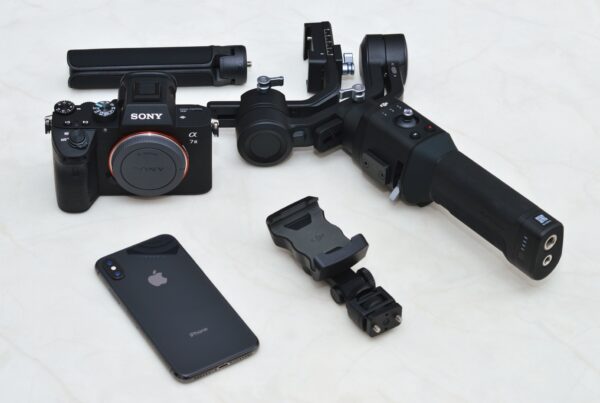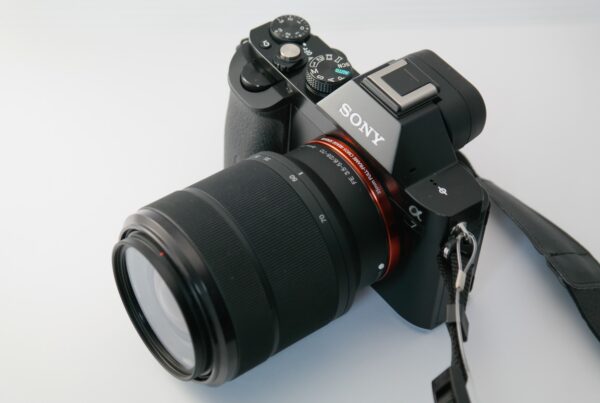

The camera store in downtown Portland was packed last Tuesday — new Canon R1 launch day. I watched a guy drop $6,500 on a body that shoots 40fps. Forty. When I asked what he shot that needed that kind of speed, he paused. “Well, I do some wildlife.” Some. Meanwhile, his three-year-old R5 sat in the used cabinet downstairs for $2,200. Same sensor. Same image quality. Just missing the specs that camera companies wrong cameras with — the ones that sell cameras but don’t make photographs.
Here’s what kills me: Canon knows he doesn’t need 40fps. Sony knows you don’t need 8K. Nikon knows nobody’s asking for 120fps video. But they keep building them anyway. Because somewhere along the way, the industry decided that photographers want computers, not cameras.
We didn’t ask for this.
The Spec Sheet Olympics Nobody Wanted
Remember when cameras were tools? Now they’re stat sheets. The R1 shoots 40fps. The Z9 shoots 120fps 4K. The A1 has 759 autofocus points. Seven hundred and fifty-nine. As if point 758 was the one holding your photography back.
A wedding photographer I know just “upgraded” from an R6 to an R5 Mark II. Her main complaint about the R6? Battery life. What’d the Mark II improve? Processing speed she’ll never use and video codecs she doesn’t understand. The battery? Basically the same. But hey, it shoots 8K now. For all those couples demanding their first dance in resolution their TVs can’t even display.
This is how camera companies wrong cameras — they solve problems photographers don’t have while ignoring the ones we do. Every generation, the specs get more ridiculous. Every generation, the real issues stay exactly the same.
My first digital camera had 6 megapixels and one autofocus point. I shot magazine covers with it. Now entry-level cameras have 50 megapixels and AI that can track a hummingbird’s left eyeball at 300 yards. Somehow, photography hasn’t gotten any easier.
Weird how that works.
What We Actually Asked For (A Short List)
Last month I ran a poll in a photography forum: “What feature would actually change your work?” Not one person said “more megapixels.” Not one person said “faster burst rate.” You know what won? Better weather sealing. By a landslide.
Here’s what working photographers actually want:
- Batteries that last all day: Not 500 shots. All. Day. Wedding photographers are carrying six batteries because camera companies wrong cameras with power management.
- Weather sealing that actually seals: “Weather resistant” means nothing when moisture kills your $3,000 body in a light drizzle.
- Menus designed by humans: Sony’s menu system feels like it was designed by someone who hates photographers. Canon’s isn’t much better.
- Dual card slots under $2,000: But no, that’s a “pro” feature. Because only pros care about not losing photos.
- IBIS that doesn’t overheat: Looking at you, Canon. Nothing says “professional tool” like thermal shutdown warnings.
Notice what’s not on that list? 8K video. 40fps burst. AI scene detection that turns sunsets into nuclear explosions. The fundamentals haven’t changed since 2015. Yet every year, camera companies wrong cameras by adding complexity instead of addressing core issues.
I’d trade every new feature from the last five years for a battery that lasts 3,000 shots and weather sealing I actually trust. Every working photographer I know would make that trade. Tomorrow.
Why Camera Companies Wrong Cameras: The Reviewer Problem

Here’s the dirty secret: cameras aren’t designed for photographers anymore. They’re designed for YouTube reviewers. For spec sheet comparisons. For “first looks” and unboxing videos.
Think about it. When a new camera launches, who gets it first? Tech reviewers who’ve never shot a wedding, never had a card fail during a first dance, never had their camera die in hour three of an eight-hour corporate event. They run lab tests. They pixel peep. They declare winners based on dynamic range charts nobody will ever see in real work.
So camera companies wrong cameras by chasing benchmarks instead of solving problems. The Z9 beats the R5 in some synthetic test? Better add another stop of dynamic range to the R5 Mark II. Never mind that both cameras already capture more range than any client screen can display.
A reviewer buddy admitted this to me last week: “I have to find differences. That’s my job. If I said ‘they’re all good enough now,’ I’d have no content.” So he magnifies flaws nobody would notice. Compares spec sheets. Creates drama where none exists. And manufacturers respond by fighting battles photographers aren’t asking them to fight.
Meanwhile, my 2018 Nikon still corrupts cards occasionally. But hey, at least the new one shoots 8K.
The One-Generation-Behind Revolution
Want to know the smartest photographers I know? They’re shooting cameras from 2021. Maybe 2020. While everyone else finances the latest body, they’re buying last generation at 40% off. Same image quality. Same professional results. Just without the features that camera companies wrong cameras with in pursuit of launch-day headlines.
My friend Sarah shoots fashion. Big clients. Real budgets. Her camera? An A7R IV she bought used when the V came out. “What am I missing?” she asked me once. “8K video and slightly faster autofocus I was already happy with?” She saved $1,500. Spent it on a lens that actually changed her work.
This is the cheat code camera companies don’t want you to know: Their old cameras are still incredible. The improvements between generations are so marginal now that buying new is basically a donation to their R&D department. A tax on early adopters who confuse “new” with “necessary.”
Honestly? The jump from film to digital was huge. From early digital to modern sensors was huge. From 2020 to 2024? That’s a firmware update sold as a revolution. The photos look identical. The work hasn’t changed. Only the price tag keeps climbing.
The rebels have figured this out. They’re on eBay buying R5s and A7R IVs while everyone else preorders the next minor iteration. They’re shooting amazing work with “outdated” cameras. Because it turns out that camera companies wrong cameras, but right cameras from three years ago work just fine.
How We Got Here (And How We Get Out)
The upgrade treadmill is exhausting. Every 18 months, another body. Another $3,000-6,000. Another learning curve for features you won’t use. Another round of camera companies wrong cameras with solutions to non-problems.
But here’s the thing — we created this monster. Every time we buy the newest body for a 5% improvement, we tell manufacturers that incremental upgrades work. Every time we finance a camera for specs we’ll never utilize, we vote for more of the same.
The way out? Stop playing. That R5 in the used case? It’s 95% as capable as the newest model at 50% of the price. That’s not compromise — that’s intelligence. The best camera upgrade isn’t a camera. It’s glass. It’s education. It’s plane tickets to somewhere worth photographing.
I know photographers still shooting 5D Mark IIIs professionally. Their clients don’t know. Their images don’t suffer. They just opted out of the game where camera companies wrong cameras every year and expect us to pay for their mistakes.
The revolution isn’t using the newest gear. It’s realizing you don’t need it. It’s understanding that camera companies wrong cameras not because they’re evil, but because we keep buying what they’re selling. Stop buying. Start creating. Your three-year-old camera is begging you to make something meaningful with it instead of shopping for its replacement.
That guy in Portland with the new R1? I ran into him at a coffee shop this morning. He was editing photos from a kid’s soccer game. They looked exactly like photos from an R5. Or an R6. Or honestly, an RP. Forty frames per second of adequacy.
The real joke? He knows it too. “I just wanted the newest one,” he admitted. At least he’s honest. Most of us pretend we need what camera companies wrong cameras with. We don’t. We need weather sealing that works, batteries that last, and menus that make sense. Everything else is just expensive noise.
The best photographers I know are still making magic with yesterday’s gear. Because they figured out the secret: the problem was never the camera. Camera companies wrong cameras because we let them. Stop letting them. Your photography will thank you. Your bank account definitely will.
FAQ
Are camera manufacturers actually listening to photographer feedback?
Some are, slowly. Fujifilm tends to respond to user requests more than others. Canon finally added IBIS after years of resistance. But mostly, they’re chasing specs that photograph well in reviews rather than features that photograph well in reality. The disconnect between what camera companies wrong cameras with and what photographers need remains massive.
What’s the sweet spot for buying used cameras to avoid depreciation?
Two to three years old is perfect. The original owner ate the 40-50% depreciation hit, any launch bugs are documented and often fixed via firmware, and the image quality is still current-generation. This is especially true now that camera companies wrong cameras with minor updates — the differences between generations keep shrinking.
Which features actually matter for working photographers?
Reliability beats everything. Good autofocus (doesn’t need to be the best), decent battery life, weather sealing that actually works, and dual card slots. Everything else — 8K, 40fps, AI scene modes — is marketing. The features that matter haven’t changed much since 2018, which is why camera companies wrong cameras by focusing on specs instead of core functionality.