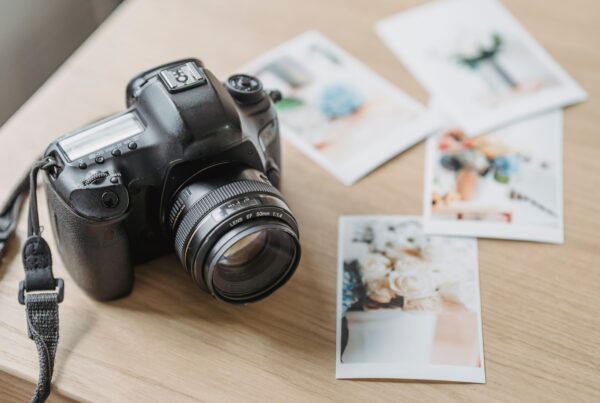

The rental house in Joshua Tree had exactly three things: a broken air conditioner, a view of the Milky Way that made me forget why I came, and a Nikon D40 someone left in the closet. Six megapixels. Kit lens. The kind of camera you find at estate sales next to boxes of Christmas ornaments. I’d driven out there with $30,000 worth of gear to shoot a personal project about isolation. Instead, I discovered my best photos worst camera story — the one that changed how I see everything.
The Camera That Time Forgot
Found it wrapped in a grocery bag, battery dead, memory card full of someone’s 2009 vacation. The D40 was Nikon’s entry-level DSLR from 2006 — plastic body, no video, ISO that turned to mud after 800. My Z9 sat in its Pelican case while I charged this relic out of curiosity. Just to see if it still worked.
It did. Barely. The rear LCD had a dead strip across the middle. The mode dial stuck between P and A. Three of the four directional buttons needed violence to register. But that shutter… still sang its little song. Still caught light.
Here’s what kills me: I only picked it up because my laptop died. No way to back up the day’s shoot from my Z9. No way to review on anything bigger than that tiny screen. So while my “real” camera sat there with its 45 megapixels and computational wizardry, I started playing with this digital dinosaur. Just to pass time until Best Buy opened.
Except Best Buy never happened. Because something else did.
When Your Best Photos Worst Camera Becomes Your Teacher
The frustration hit immediately. No eye detection. No IBIS. No dynamic range to speak of. Try to push those files in post? They fell apart like wet newspaper. Want to crop? Six megapixels laughs at your ambition. The kit lens — an 18-55mm f/3.5-5.6 — had the optical quality of looking through a shower door.
But then the desert light turned gold, and I had to shoot something. First frame: blown highlights. Second: muddy shadows. Third: both. The D40 didn’t capture the light I saw. It captured some other light — meaner, more honest.
By frame twenty, I’d stopped fighting it. Started asking different questions. Not “how do I get this shot?” but “what shot does this camera want?” Not “how do I fix this limitation?” but “what happens if I lean into it?”
The answer changed everything. When you can’t rely on technical perfection, you start seeing differently. When your camera won’t do the work for you, you have to do the work. The best photos worst camera paradox isn’t about the gear. It’s about what happens to your brain when the gear stops helping.
The Images That Shouldn’t Exist
That afternoon, I shot 312 images on the D40. Deleted 290 immediately — they were technically garbage. But those remaining 22? They haunt me. Not because they’re sharp (they’re not). Not because they’re clean (ISO 1600 looked like television static). But because they’re true.
There’s one of a Joshua Tree at dusk, completely silhouetted, stars just starting to show. On my Z9, I’d have lifted the shadows, balanced the exposure, made it “correct.” The D40 couldn’t do any of that. So I got this stark, graphic thing — pure black against electric blue. It looks like a fever dream. It looks like how that moment felt.
Another: my own shadow stretched across cracked earth, distorted by the wide end of that terrible kit lens. The distortion should ruin it. Instead, it makes me look like I’m being pulled into the desert itself. Which, emotionally, I was.
The best photos worst camera revelation kept hitting. Without autofocus tracking, I had to prefocus and wait. Without burst mode worth using, I had to pick my moment. Without resolution to spare, I had to fill the frame. Every technical limitation forced a creative decision.
Honestly? Those 22 images are stronger than anything I shot that year with “proper” gear.
The Constraint Engine
Here’s what nobody tells you about creative constraints: they’re not obstacles. They’re engines. When you can’t do everything, you’re forced to do something. And that something — that specific, limited, frustrating something — is where style lives.
Think about it. Cartier-Bresson had one lens, one camera, one kind of film. Eggleston shot mundane subjects with “amateur” color film when everyone said serious work was black and white. Sally Mann used damaged lenses and expired plates. Their limitations became their language.
The best photos worst camera principle works because it forces you out of your comfort zone. With my Z9, I had solutions for everything. Low light? Crank the ISO. Fast action? 20fps burst. Difficult focus? Let the AI handle it. But solutions aren’t style. Solutions are the absence of style.
That D40 had no solutions. Only problems. And every problem demanded creativity instead of technology.
What Changed When I Came Home
I left the D40 in Joshua Tree — it wasn’t mine to take. But I brought something else back. A question that rewired how I work: What if I couldn’t solve this with gear?
Now, before every shoot, I add a constraint. Sometimes it’s technical — one focal length, one ISO, one aperture. Sometimes it’s conceptual — only shadows, only reflections, only things that are leaving. The constraint doesn’t matter. What matters is having one.
My best photos worst camera experience taught me that creativity needs pressure. Not the pressure of deadlines or clients or mortgage payments. The pressure of limitation. The pressure that makes you solve problems with your eye instead of your credit card.
Last month, I shot an entire wedding with my iPhone. Not as a stunt. As an exercise. The couple knew — they’d hired me for my “real” work the day before. But that iPhone session? Where I couldn’t hide behind shallow depth of field or perfect rendering? Where I had to find moments instead of manufacturing them? Some of those images made the album. Because they had something my technical perfection missed. They had urgency.
Look, I’m not saying sell your gear. I’m not joining the “gear doesn’t matter” cult. Gear matters. But it matters less than we think, and differently than we think. The best photos worst camera lesson isn’t that good gear is bad. It’s that perfect gear can make you lazy. It can solve problems you should be solving with your brain.
Sometimes I think about that D40 sitting in a closet in Joshua Tree. Wonder if anyone else has found it. Wonder if it gave them the same gift it gave me — the gift of having to try harder. The gift of no easy answers. The gift of discovering that your best photos worst camera story might be waiting in the thing you’d never choose. If any of this resonates — if you’ve ever found brilliance in limitation — I’d love to hear your story. What was your worst camera? And what did it teach you that your best one couldn’t?
FAQ
Is the “best photos worst camera” concept just another way of saying gear doesn’t matter?
Not exactly. It’s saying that limitations force creative solutions that unlimited options don’t. Good gear removes barriers, but sometimes those barriers are what push you to see differently. It’s not anti-gear — it’s pro-constraint.
Should I intentionally use worse equipment to improve my photography?
You don’t need worse equipment — you need constraints. Set your zoom to one focal length for a month. Shoot only in harsh midday light. Use only natural reflectors. The best photos worst camera principle is about limitation forcing innovation, not about suffering with bad tools.
What makes certain images from limited cameras better than technically perfect ones?
Desperation breeds invention. When you can’t solve problems with technology, you solve them with seeing. Those solutions often have more personality, more specificity, more voice than images where the camera did the heavy lifting. The struggle shows up as style.