The 3 p.m. Call Time Nobody Talks About
It’s 3:15 in the afternoon on a Sunday in March. The Dolby Theatre won’t open its doors to guests for another four hours. The red carpet itself — that long runway of crimson velvet under a canopy of white light — is technically complete, but barely. A team is still adjusting the step-and-repeat backdrop at the far end. A PA is walking the rope line with a measuring tape.
You’re already there.
You’ve been there since 2 p.m., actually, because the media pool check-in opened at 1:30 and if you showed up at 1:45 like a reasonable human being, you’d be behind seventeen photographers from four countries all doing the same mental math you were doing: early position is everything. You’re carrying two camera bodies. One lens case. A vest with more pockets than a fishing vest and less dignity than you’d like to admit. Your lower back already hurts. It’s going to hurt a lot more by midnight.
This is red carpet photography. Not the part you see. The part that makes the part you see possible.
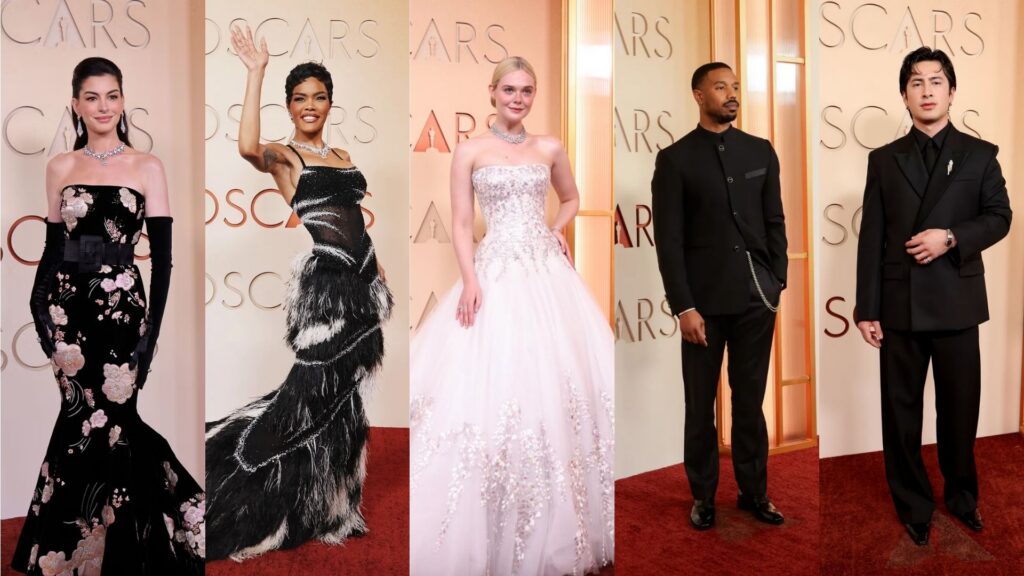
The photographers covering the Oscars aren’t there for the celebrities. They’re there for the craft — which is a harder, stranger, more physically demanding thing than most people imagine. What follows is a walk through what that operation actually looks like, from credentialing to final delivery. The stars are secondary. The work is the story.
Getting In: The Credential Gauntlet
Here’s something nobody in a movie about Hollywood ever shows you: the paperwork.
Credentialing for major awards ceremonies — the Oscars, the Emmys, the Golden Globes — typically opens months in advance. You’re applying through the Academy, through your wire service, through your publication’s photo editor, or some combination of all three. You’re submitting tearsheets. A portfolio. Letters from editors confirming your assignment. Tax documentation, in some cases. Proof that the outlet you’re shooting for has the distribution reach that justifies putting a camera in your hands six feet from nominees.
And then you wait.
Honestly? The credential itself isn’t even the hard part. The hard part is what happens after approval: the pool assignment. The Oscars media operation divides press photographers into pools — wire services in the premier positions, editorial photographers in mid-carpet, and a broader pool of assigned photographers filling out the rest. Where you land in that hierarchy is largely determined by your wire affiliation or publication tier before you ever shoot a single frame.
I was assigned to a mid-carpet position my first year covering a major awards ceremony. I had shot galas, premiers, award shows — I thought I understood how this worked. I did not understand how this worked. My position was behind two taller photographers from agencies I recognized immediately. I could work around them, technically. But the angle I’d mentally planned for — the clean full-length that every style desk wants for opening-night coverage — was simply gone. Not hard. Gone. I spent forty-five minutes recalculating.
That recalculation is the job. If you can’t do it on your feet, under pressure, with someone’s elbow in your peripheral vision, this particular assignment will break you.
What You Carry, and Why Every Ounce Is a Decision
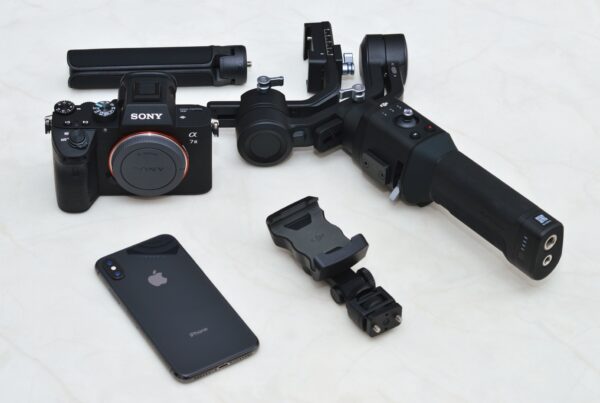
The gear conversation at the red carpet level is different from almost every other photography context. You’re not optimizing for versatility. You’re not building a kit that handles everything. You’re engineering a very specific solution to a very specific problem: fast, silent, reliable, and light enough that you can hold it at chest height for six hours.
Most working press photographers covering red carpet photography arrive with two bodies. Always two. One primary, one backup — not as a luxury but as an operational requirement. If your primary malfunctions mid-carpet during a talent’s pass, you don’t get that moment back. The handler is already moving the talent to the next position. The window closed while you were rebooting.
Lens choice is where it gets interesting. Zooms are convenient. Primes are right.
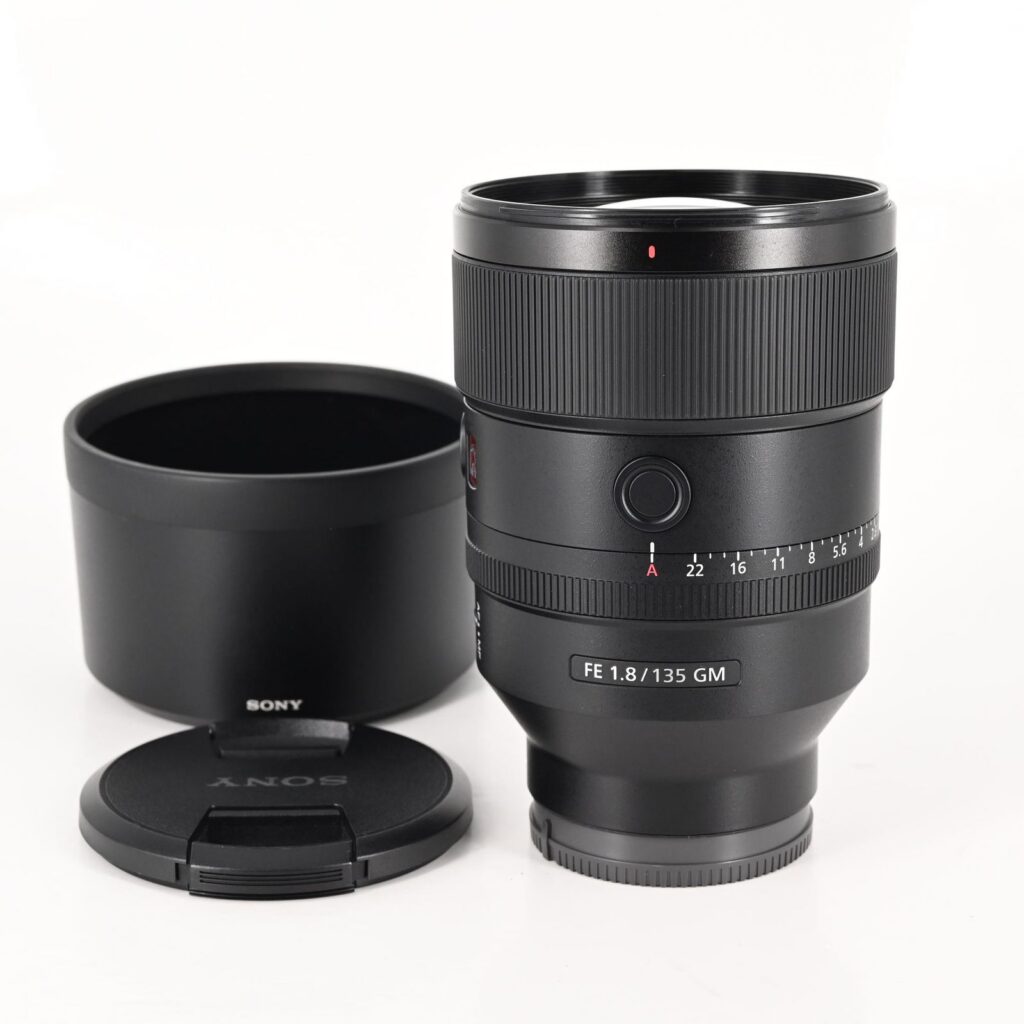
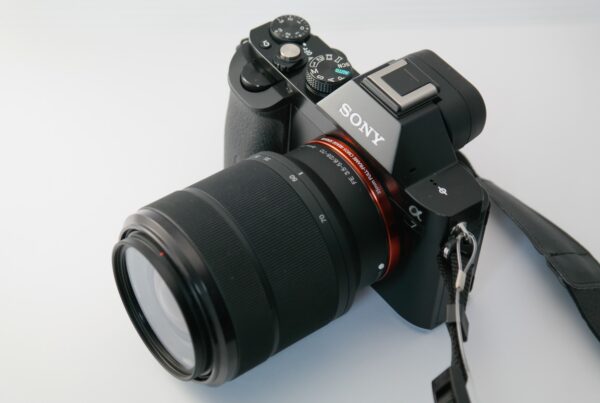
In the pit — the designated photographer pen — you’re working at consistent distances from a consistent position. You know roughly how far you are from the mark. A 70-200 feels smart in theory; in practice, you’re in a compressed physical space surrounded by other bodies and equipment, and the variable focal length becomes a liability when your instincts need to fire faster than your hand can turn a ring. Many experienced red carpet photographers work with a 135mm f/1.8 or an 85mm f/1.4 on their primary body and a wider prime — 35mm, sometimes 50mm — on the backup for environmental shots and arrivals.
You’re shooting wide open, or close to it. The background on a red carpet — even a well-lit, sponsor-branded one — is usually chaos. Out-of-focus chaos is better than sharp chaos. You want the subject to pop. You want the background to fall away. You’re not documenting the environment; you’re isolating a person inside it.
And your camera settings are essentially locked before you even raise the body. The lighting on a major awards carpet is controlled — engineered, actually, by a lighting team that has been calibrating since morning. You should know your exposure before the first talent walks. If you’re still chimping your histogram at 6 p.m., something went wrong in your preparation.
Ninety Seconds: The Only Number That Matters
Here’s the math that governs red carpet photography, and it’s unforgiving.
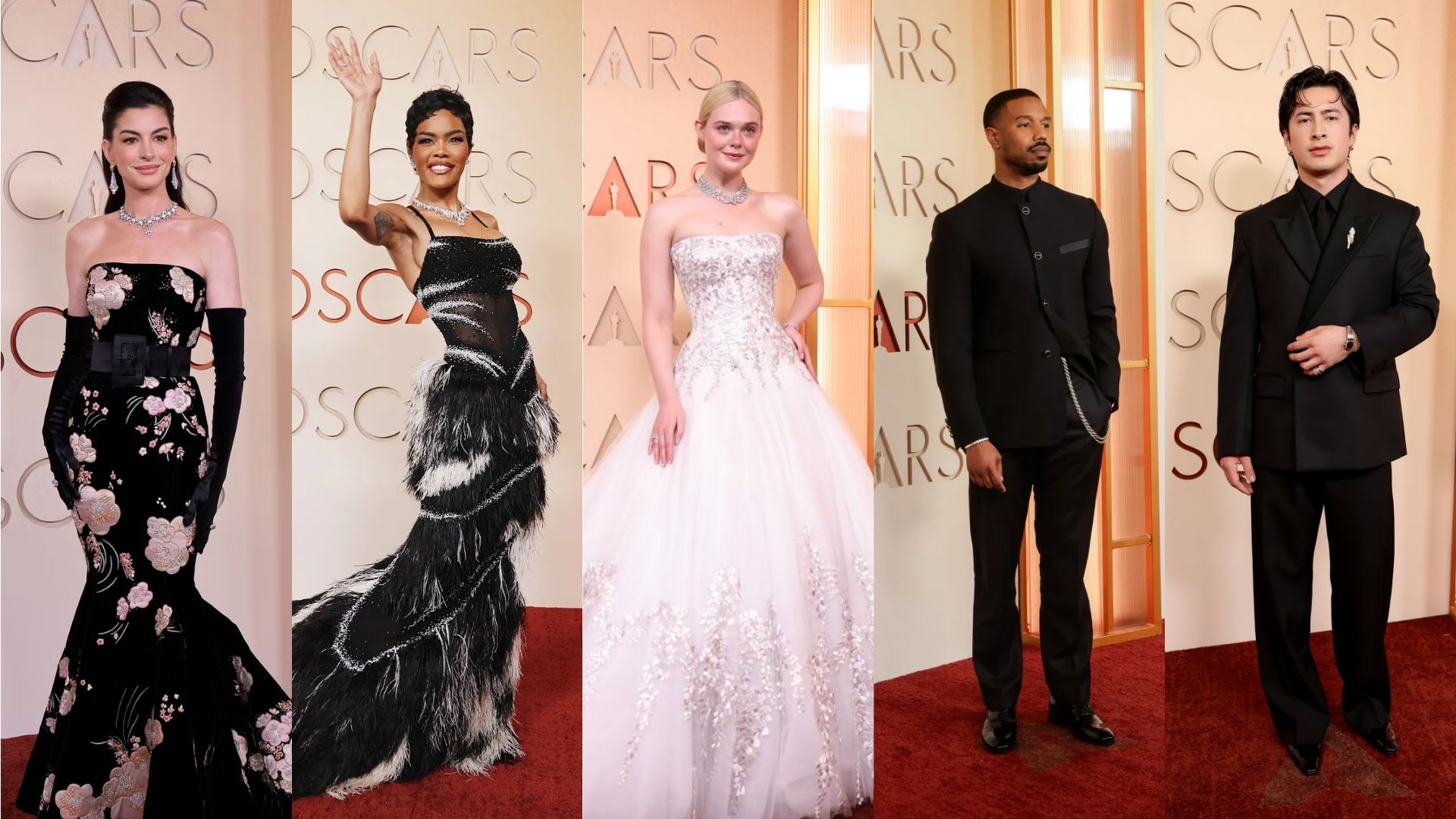
A major awards ceremony like the Oscars has somewhere between 150 and 250 credentialed talent appearances on the carpet, spread over a window of approximately two to three hours. Each celebrity is moving through a choreographed sequence: arrival, step-and-repeat, interview positions, and the final walk to the entrance. The handlers — the publicists, the studio reps, the personal assistants — are timing every beat.
In your section of the carpet, for any individual talent, you have roughly 90 seconds. Maybe less. Sometimes significantly less.
In 90 seconds, at the burst rate of a modern mirrorless body, you can shoot 200 frames. You will keep maybe 12. Of those 12, you’ll submit 3 or 4. Of those 3 or 4, your editor will use 1. Sometimes zero, if a wire service delivered something better.
That ratio — 200 frames to 1 publishable image — sounds brutal. It is brutal. It’s also normal. The discipline isn’t shooting less. The discipline is knowing which 12 you’re looking for while you’re still pressing the shutter.
There’s a version of this job that feels glamorous from the outside. You’re at the Oscars. You’re photographing the most famous people in the world. Someone will ask you about this at a dinner party and their eyes will widen.
What they don’t see is that you’ve been standing on concrete for five hours. Your wrists ache from holding a two-pound body at eye level. You’ve eaten a granola bar since breakfast. When the carpet clears and you walk back to the media room to begin triage on a 2,000-frame shoot, you’ll do that standing up, at a laptop, because there’s no time to sit.
The 200-Person Problem: Managing the Pit
Nobody prepares you for the other photographers.
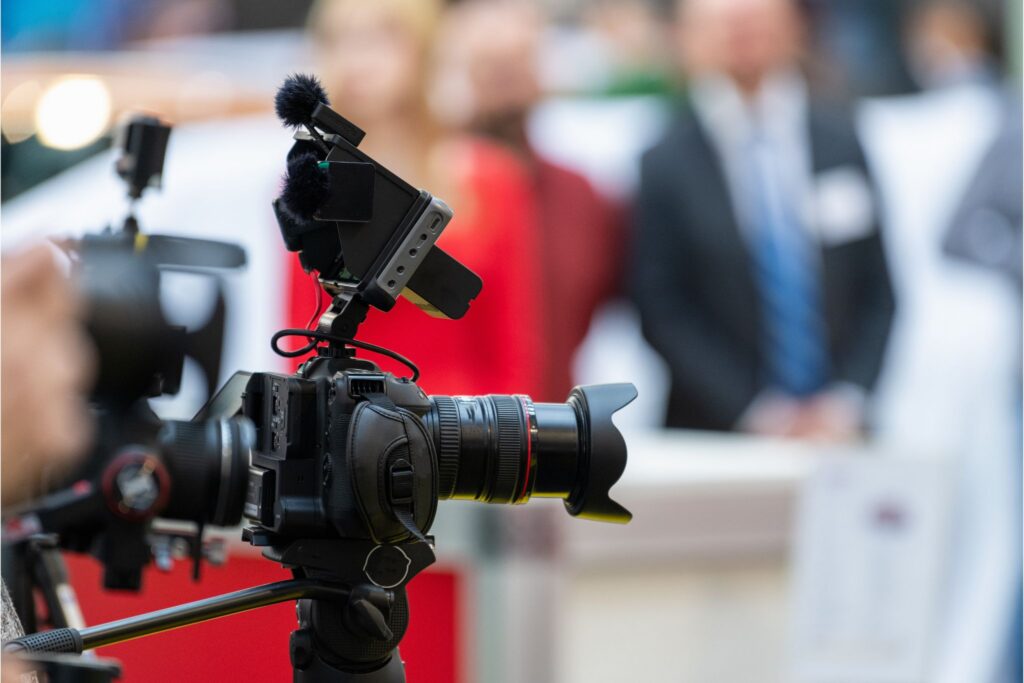
This sounds like a small thing. It is not a small thing. In the press pit at a major red carpet event, you are shoulder to shoulder — sometimes literally in contact — with photographers from every major wire service, international editorial outlet, and credentialed publication present. Some of those photographers are extraordinarily professional. Some are aggressive in ways that will genuinely surprise you the first time you experience it.
The unwritten rules of the pit are real, even though they’re unwritten. The NPPA’s code of ethics covers the professional standards — but it doesn’t cover what to do when someone is encroaching your position centimeter by centimeter at the Oscars. You hold your position. You don’t encroach forward. You don’t move into someone else’s sightline unless they’ve moved first. You call out “coming through” when you need to shift. You don’t react when someone’s elbow clips your arm mid-burst — and it will clip your arm mid-burst.
I’ve watched a photographer from a major international outlet spend the first forty minutes of a carpet systematically inching forward, centimeter by centimeter, until they were in front of the established line. Nobody said anything directly. But the photographers on either side of that person spent the rest of the evening making their frustration known in small, professional ways. Nobody helped them when their battery door popped open.
The pit is its own ecosystem. Your reputation inside it follows you from event to event. The press pool in entertainment photography is not as large as it looks from the outside. Press freedom and professional conduct aren’t abstract ideals in this world — they’re operational realities you feel every time you step into a credentialed position. Be the person who calls your position and holds it. Be the person who doesn’t reach over someone’s shoulder. It sounds obvious. In the moment, under pressure, when the talent you’ve been waiting for is walking toward your section and you’re not sure you’re going to get the angle — it’s less obvious than you think.
What the Image Actually Costs
The photographs that run the next morning — the ones on the front page of entertainment sections, leading every recap, filling the social feeds of every outlet that covers awards season — look effortless. They should look effortless. That’s part of the craft.
But here’s what’s inside each one: months of credentialing work, a pre-dawn call time, five hours on concrete, two camera bodies, a memorized exposure, a position you fought to hold, a 90-second window you were ready for, and a post-session cull that took longer than the carpet itself.
Red carpet photography at the professional level is not a glamour job dressed up as technical work. It’s a logistics operation dressed up as a glamour job. The photographers who are good at it — really good at it — are equal parts preparation and adaptability. They’ve done the credential work. They’ve engineered their kit for the specific conditions. They’ve studied the talent list and know which subjects move fast and which ones stop. They’ve been in the pit before and know how to hold space without becoming a problem for the person next to them.
And when the talent walks — when the light hits right and the expression opens and the frame is clean — they get the shot.
Not because they got lucky. Because they spent six hours making sure luck had somewhere to land.