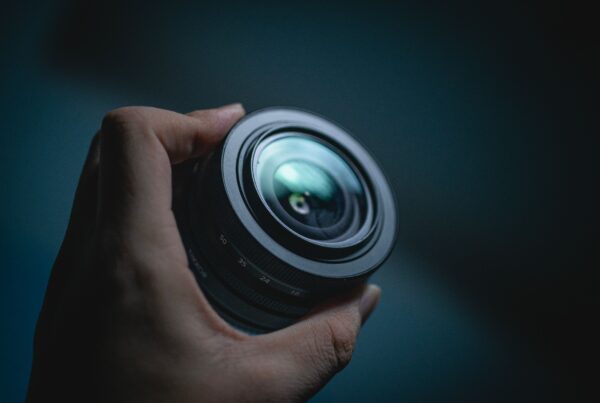
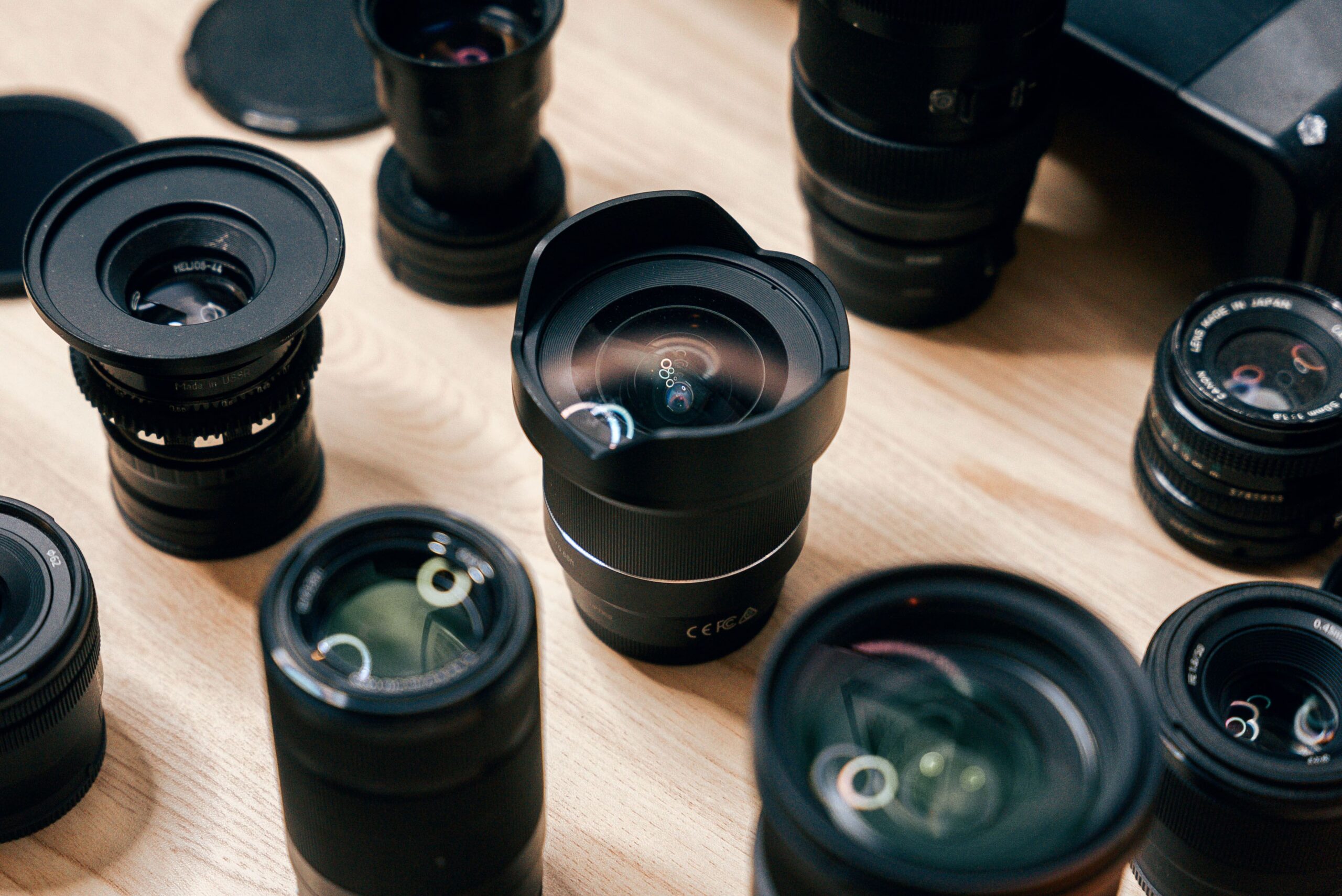
The ultra light prime lens question just got sharper: 7Artisans’ 109g 18mm F2 for Sony APS-C, announced in late September 2026 at $169, is claimed as the lightest autofocus F2 prime for the format. For travel and street shooters building a minimal kit, that combination of weight, speed, and price changes the math.
Barcelona, August, the hour before the light goes orange. I’d been walking since nine in the morning with a body, two zooms, a spare battery, and a water bottle, and by four in the afternoon my shoulder had that specific hot ache that tells you the strap has been rubbing the same half inch of trapezius for six hours. My hand kept going to the bag. Not to shoot. To shift it.
And here’s the part that stings: I came home with maybe eleven frames I liked. Not because the light was bad or the city was boring. Because by two in the afternoon I’d stopped looking and started managing. Managing weight, managing heat, managing the low-grade resentment of carrying a kit built for every scenario instead of the one I was actually in.
That’s the problem an ultra light prime lens is built to solve. Not image quality. Not bokeh. Endurance.
What Is an Ultra Light Prime Lens, and Why Does 109 Grams Matter?
Let’s define terms before we get precious about them. An ultra light prime lens is a fixed-focal-length optic engineered so aggressively around mass and depth that it changes how the camera behaves in your hand, not just what the scale says. The pancake form factor is the usual expression of it.
DPReview covered the 7Artisans 109g 18mm F2 on September 29, 2026, reporting a $169 price for Sony APS-C and a claim that it’s the lightest autofocus F2 prime available for the format. One hundred and nine grams. That’s the number the whole conversation hangs on.
For context on what that weight does: 109g is roughly the mass of a deck and a half of playing cards. It’s less than most smartphones. Mount it on an APS-C body and the center of gravity stays inside the body, which means the camera hangs flat against your chest instead of swinging out and tapping your sternum with every step.
That’s the mechanical argument for an ultra light prime lens, and it’s the one people underrate. We talk about weight as a number on a spec sheet. In practice it’s a torque problem. A heavy lens is a lever, and your neck is the fulcrum.
The 7Artisans sits in a field DPReview named directly: the Sony E 16mm F2.8, the Sony E 20mm F2.8, the Sigma 19mm F2.8 DN Art, and 7Artisans’ own 18mm F6.3. Three of those four are F2.8 or slower. That’s the gap this ultra light prime lens is aiming at.
The Honest Case Against Carrying Everything
I want to be careful here, because “just bring less gear” is the laziest advice in photography. It’s the thing people say when they’ve confused minimalism with discipline.
Here’s the honest version. Carrying everything isn’t irrational. It’s insurance. You bring the 70-200 because the one time you didn’t, the thing happened across the plaza. You bring the fast 35 because the bar was darker than you expected. Every piece of overweight gear in your bag is a scar from a frame you missed.
But insurance has a premium, and the premium is attention. Here’s my first confession of this piece: I have absolutely used lens selection as procrastination. Standing on a corner, changing glass, when the real reason was that I hadn’t seen anything worth shooting yet and fiddling with the bag felt more productive than admitting it.
An ultra light prime lens removes that escape hatch. One focal length, no decisions, nothing to swap. You either see the picture or you don’t. That’s uncomfortable, and it’s exactly why it works.
The second thing a genuinely small kit buys you is social invisibility. A big camera with a long lens reads as intent. People straighten up. Conversations change pitch. A compact body with a pancake on the front reads as a tourist, and tourists are furniture.
Where an Ultra Light Prime Lens Actually Earns Its Keep
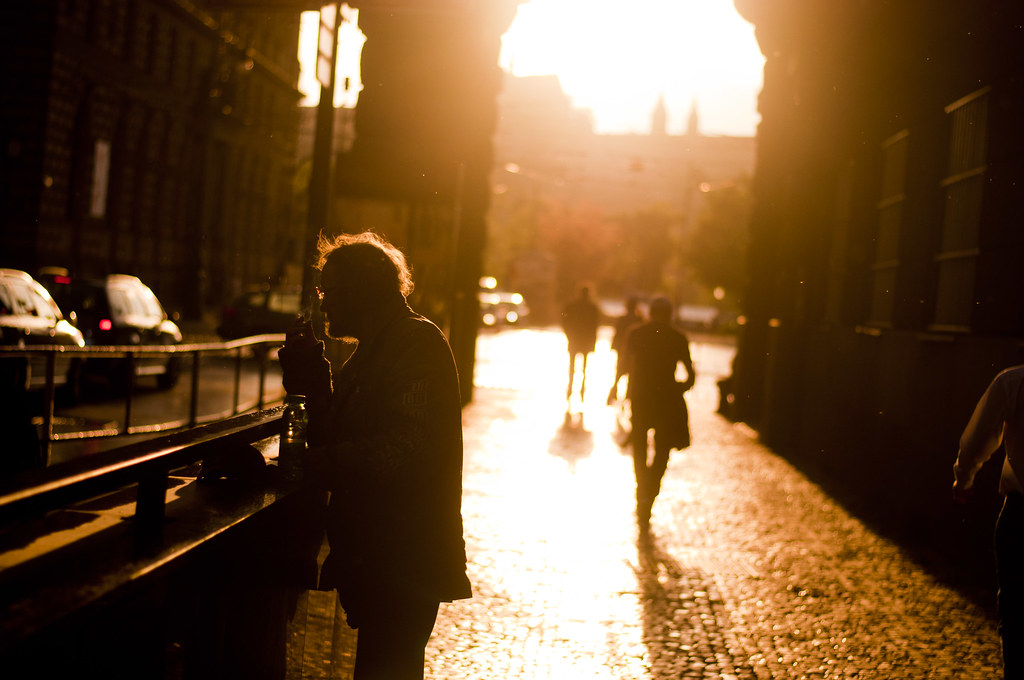
Let’s get specific about the shooting situations where an ultra light prime lens stops being a novelty and starts being the right tool.
- Multi-day travel on foot: The difference between a 600g kit and a 1.4kg kit compounds over eight hours. Hour one feels identical. Hour six does not.
- Street work in dense cities: An 18mm on APS-C gives roughly a 27mm equivalent field of view, which is the classic reportage width: you have to be close, but you get context.
- Second-body duty: Hang an ultra light prime lens on a backup body and it costs you almost nothing to carry. Suddenly your backup is also your wide option.
- Environmental portraits with context: That 27mm-equivalent width lets you put a person in their place, which is a different picture than putting a person in front of a blur.
- Family and documentary work at home: The camera you leave on the kitchen counter gets used. The one in the closet does not.
Note what’s not on that list. Sports. Wildlife. Formal portraiture. Weddings, mostly. An ultra light prime lens is not a general-purpose answer, and anyone selling it as one is selling you something.
What it is: a specialized tool that happens to be cheap enough to own alongside your real kit without agonizing over it. That’s a genuinely new position in the market.
The Compromise Nobody Puts in the Headline
You do not get 109 grams and $169 for free. Physics bills you, and so does the accounting department.
The honest expectations for any budget ultra light prime lens in this weight class: corner performance wide open will trail a premium prime. Vignetting will be present at F2 and will mostly clear by F4. Autofocus will be adequate for static and moderately-paced subjects rather than competitive with a flagship’s tracking motor. Build will be mostly polycarbonate, not metal, because metal weighs things.
None of that is a condemnation. It’s the deal. The question is whether the deal is good, and at this weight and this price, for this use case, it looks good.
Here’s where the review-site reflex misleads people. A chart-based comparison between an ultra light prime lens and a $1,200 G Master will always favor the G Master. That comparison is also meaningless, because nobody walks eighteen kilometers through Lisbon with a G Master and a full-frame body and stays in a good mood.
The correct comparison is between an ultra light prime lens and the lens you actually brought, which on long days is frequently no lens at all, because the camera stayed in the hotel.
How Does an Ultra Light Prime Lens Compare to the Existing APS-C Options?
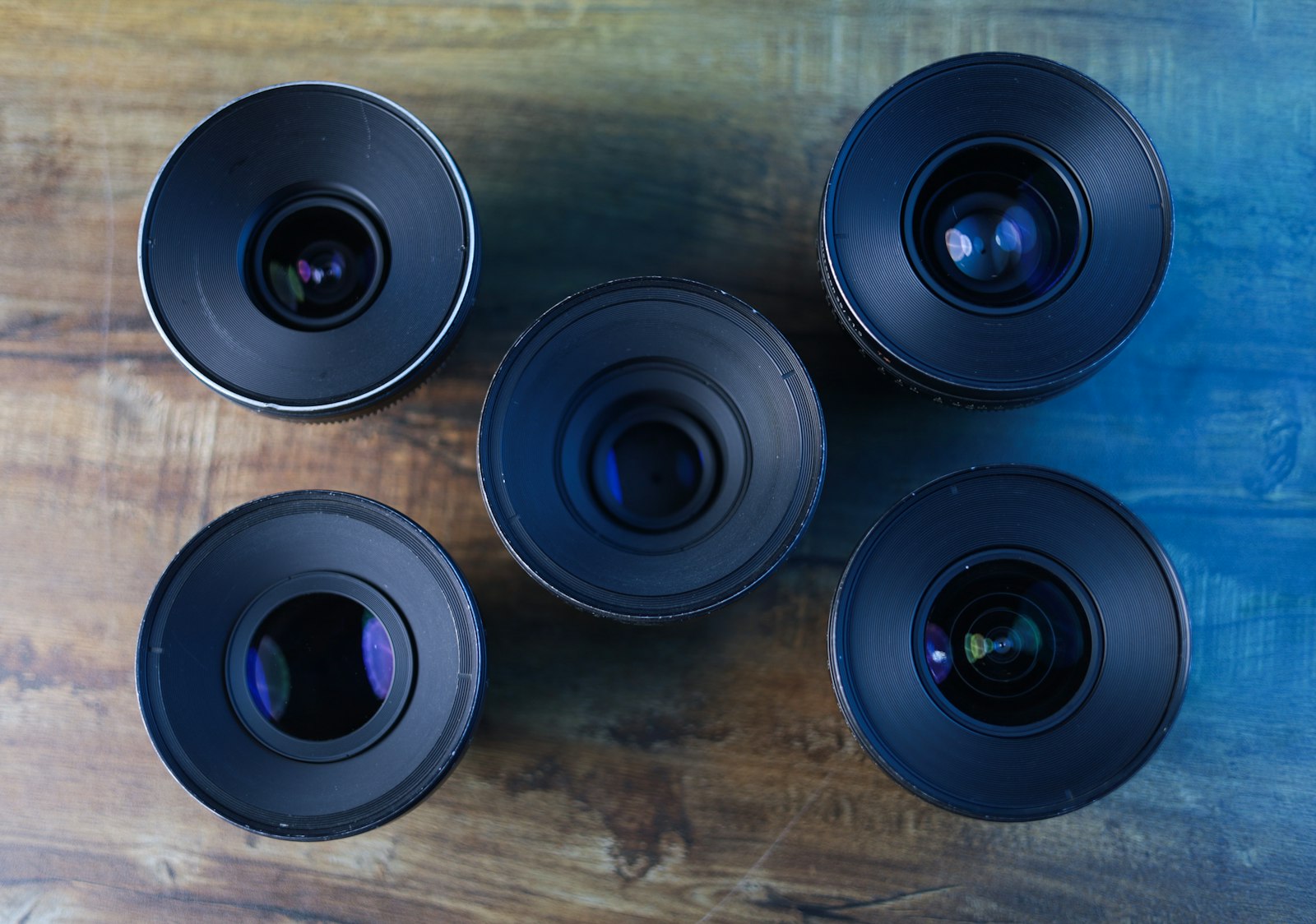
DPReview positioned the new 7Artisans against four specific alternatives, and the shape of that field tells you what’s changed.
| Lens | Position in the field |
|---|---|
| 7Artisans 18mm F2 (109g, $169) | The new entry, claimed lightest AF F2 prime for APS-C |
| Sony E 16mm F2.8 | Long-standing pancake option, slower aperture |
| Sony E 20mm F2.8 | Slightly longer pancake, slower aperture |
| Sigma 19mm F2.8 DN Art | Budget wide prime, slower aperture |
| 7Artisans 18mm F6.3 | 7Artisans’ own body-cap-class lens, manual and far slower |
Look at the aperture column. Three competitors at F2.8, one at F6.3. The F2 figure on the new ultra light prime lens isn’t a marginal improvement over F2.8, it’s a full stop, and a full stop is the difference between ISO 3200 and ISO 6400 on an APS-C sensor that is already working hard.
That matters most in the exact situations this lens is built for: interiors, blue hour, markets under awnings, the inside of a train. The places travel photography actually happens, as opposed to the places travel photography gets photographed for brochures.
The 18mm F6.3 comparison is the interesting one historically. 7Artisans has been making ultra-thin manual pancakes for years, and those were fun objects with a real ceiling: no autofocus, and an aperture slow enough to pin you to daylight. Putting autofocus and F2 into roughly that form factor is the actual story.
The Autofocus Line Has Moved, and It Keeps Moving
This is the part I find genuinely interesting about 2026, and it’s bigger than one lens.
For most of the mirrorless era, third-party budget glass meant manual focus. That was the trade: you got a usable optic for under two hundred dollars, and in exchange you gave up autofocus entirely. For a lot of working shooters, that was an instant disqualification. You cannot manually focus a stranger walking toward you at 4mph while also composing and watching the background.
That line has been collapsing for a few years now, and it’s collapsing from both ends. We covered the SIRUI Aurora autofocus lenses as a signal of exactly this shift, and the 7Artisans AF 135mm f/1.8 Max showed the same company pushing autofocus into a focal length that used to be exclusively premium territory.
Now the same approach arrives in a 109g pancake. A sub-$200 ultra light prime lens with working autofocus is not a category that existed in a meaningful way five years ago. It exists now.
Second confession: I dismissed cheap third-party autofocus for too long. I assumed the motors would hunt, the firmware would be stale, and the whole thing would be a hobby project I’d resent on a paid job. Some of that was fair at the time. Keeping that assumption into 2026 is just laziness dressed up as standards.
What This Does to Pricing Expectations for Compact APS-C Glass

Here’s where the ripple effects get real for working photographers, including those of us who mostly shoot full frame.
When an ultra light prime lens at $169 includes autofocus and an F2 aperture, it resets what the market will tolerate at $400 and $500. A first-party pancake at twice the price now has to justify that gap with something concrete: better corners, weather sealing, faster motors, something you can point at.
That pressure is healthy. It’s the same pressure that dragged third-party full-frame primes from “interesting if you’re patient” to “genuinely competitive” over the last several years. Budget glass getting good doesn’t make expensive glass pointless. It makes expensive glass accountable.
There’s a used-market dimension too. When a new ultra light prime lens lands this cheap with autofocus, older manual pancakes and slower first-party compacts get harder to move secondhand. You’ll see that play out unevenly across eBay, KEH, GearFocus and the rest, because used pricing always lags new-product news by a season or two.
If you’re sitting on compact APS-C glass you don’t use, that lag is your window. Not advice, just arithmetic.
Focal Length Honesty: Is 27mm Equivalent Right for You?
An 18mm on APS-C lands around 27mm equivalent. That’s wide, and wide is a commitment.
Twenty-seven millimeters is a storytelling width. It takes in the room. It includes the sign above the door, the person at the next table, the texture of the street. It also stretches faces near the frame edge, punishes sloppy horizons, and makes distant subjects look even more distant than they are.
If your instinct is to stand back and isolate, an ultra light prime lens at this width will fight you every single day. You will hate it. Be honest about that before you spend the money, because a $169 lens you don’t use is more expensive than a $900 lens you use constantly.
If your instinct is to step in close, it’s the right tool. Street work at 27mm means getting near enough that people notice you, which is the whole uncomfortable skill of the genre. The lens doesn’t fix that. It just removes one excuse for not practicing it.
And a practical note on depth of field: at 18mm and F2 on APS-C, you have a lot of it. Zone focusing becomes genuinely viable. Set it, stop thinking about focus, shoot with your eyes instead of your menus.
Building a Real Minimal Kit Around an Ultra Light Prime Lens
Let me sketch what this looks like in practice, because “one lens” is a philosophy, not a packing list.
- One APS-C body: Whatever you have. The weight savings from an ultra light prime lens are partly wasted if you bolt it to a grip-heavy flagship.
- The ultra light prime lens itself: Mounted, not in the bag. If it’s in the bag you’ve already lost the plot.
- Two spare batteries: Small bodies have small cells. This is the tax you pay.
- One fast card and one backup card: Separated, in different pockets.
- A wrist strap, not a neck strap: The whole point is that the rig is light enough to dangle from your hand.
- No bag at all, ideally: If it fits in a jacket pocket, you’ve built the thing correctly.
That kit, with an ultra light prime lens on the front, disappears. You stop thinking about it, which is when you start seeing again. I know that sounds like a greeting card. It’s also just true, and every photographer who’s done a one-lens trip will tell you the same thing.
The counterpoint worth naming: this kit has no redundancy. One body, one lens. If either dies, your day ends. For paid work, that’s disqualifying. For personal work, it’s a risk most of us should take more often.
What About Full-Frame Shooters?
If you’ve gone full frame, an APS-C ultra light prime lens is not for your main body. That’s not in dispute.
But a lot of working photographers still have an APS-C body in a drawer. The one you upgraded from. The one you kept as a backup and then never used because setting it up felt like work.
A $169 ultra light prime lens is a cheap way to make that body useful again as a dedicated personal-work camera. Not a backup. A different camera for different work, with different constraints, which is often exactly what a creative rut needs.
There’s also a parallel worth drawing. The trade-offs in compact APS-C glass echo the ones in full-frame compacts, something we got into in our comparison of the Canon RF 45mm f/1.2 and EF 50mm f/1.2L. The question is always the same: what are you giving up for size, and does it matter for your work?
The Part Where I Argue With Myself
I’ve spent two thousand words making the case for an ultra light prime lens, so let me take the other side properly.
Small gear can become its own form of gear acquisition. There’s a version of this hobby where you buy the pancake, feel the thrill of the tiny kit for three weeks, and then go back to your zoom because the zoom actually covers your work. Now you own a lens you don’t use, and the minimalism was just shopping with better branding.
Second: an ultra light prime lens doesn’t make you a better photographer. Constraint can sharpen you, but it can also just limit you. Plenty of great work comes from shooters hauling absurd amounts of gear because the work demands it.
Third, and this is the uncomfortable one: for some of us, the real problem isn’t weight. It’s that we’ve stopped going out. No ultra light prime lens fixes a motivation problem. It just makes going out marginally easier, and marginal is not nothing, but it isn’t magic either.
So buy one if the use case is real. Don’t buy one hoping it’ll restore something.
What to Take From This
- The headline numbers: 109g, F2, $169, Sony APS-C, announced late September 2026, claimed lightest autofocus F2 prime for the format.
- The real benefit is endurance, not optics: An ultra light prime lens buys you hours of attention, not sharper corners.
- The aperture is the differentiator: A full stop over the F2.8 pancakes it’s positioned against matters in exactly the low-light situations travel and street work live in.
- Expect budget-tier compromises: Soft corners wide open, vignetting at F2, polycarbonate build, competent rather than elite autofocus.
- 27mm equivalent is a commitment: If you don’t like shooting wide and close, an ultra light prime lens at this focal length will frustrate you daily.
- Market effect: Sub-$200 autofocus glass pressures mid-priced compacts to justify their premium with something concrete.
- Best use case: Reviving a drawer APS-C body as a dedicated personal-work camera, or stripping a travel kit to pocket size.
Where This Leaves Us
Barcelona again, except this time it’s a thought experiment. Same streets, same heat, same eight hours. One body, one ultra light prime lens, nothing on the shoulder. I don’t know that I’d come home with better pictures. I’m fairly confident I’d come home with more of them, because I’d still be looking at four in the afternoon instead of calculating how far the hotel is.
That’s the whole pitch for a $169, 109-gram piece of glass. Not that it’s the best lens you can buy, because it isn’t. That it’s a lens that changes your behavior, and behavior is where photographs actually come from.
Third-party autofocus at this price and weight is a real shift, and it’s worth paying attention to even if this particular ultra light prime lens isn’t for your mount or your eye. The floor is rising. That’s good for everyone holding a camera.
FAQ
What makes the 7Artisans 18mm F2 an ultra light prime lens?
At 109 grams, it’s claimed as the lightest autofocus F2 prime available for APS-C. The pancake design keeps the camera’s center of gravity near the body, so it hangs flat rather than swinging.
How much does the 7Artisans 18mm F2 cost?
DPReview reported a price of $169 when the lens was announced on September 29, 2026. That positions it well below most first-party compact primes for Sony APS-C cameras.
What field of view does an 18mm ultra light prime lens give on APS-C?
Roughly 27mm equivalent in full-frame terms. That’s a classic reportage width: wide enough to include context and environment, but requiring you to work close to your subject.
Is an ultra light prime lens good enough for professional work?
For travel, street, and documentary work where mobility matters more than corner-to-corner perfection, yes. For paid jobs needing redundancy, fast tracking, or weather sealing, treat it as a supplement rather than a primary lens.
What competes with this ultra light prime lens on Sony APS-C?
DPReview named the Sony E 16mm F2.8, Sony E 20mm F2.8, Sigma 19mm F2.8 DN Art, and 7Artisans’ own manual 18mm F6.3. The new lens is a full stop faster than the F2.8 options.
Should full-frame shooters consider an ultra light prime lens for APS-C?
Only if you own an APS-C body. It’s a cheap way to turn an unused backup into a dedicated personal-work camera with a genuinely different shooting feel from your main kit.
Photo: Viridiana Rivera