
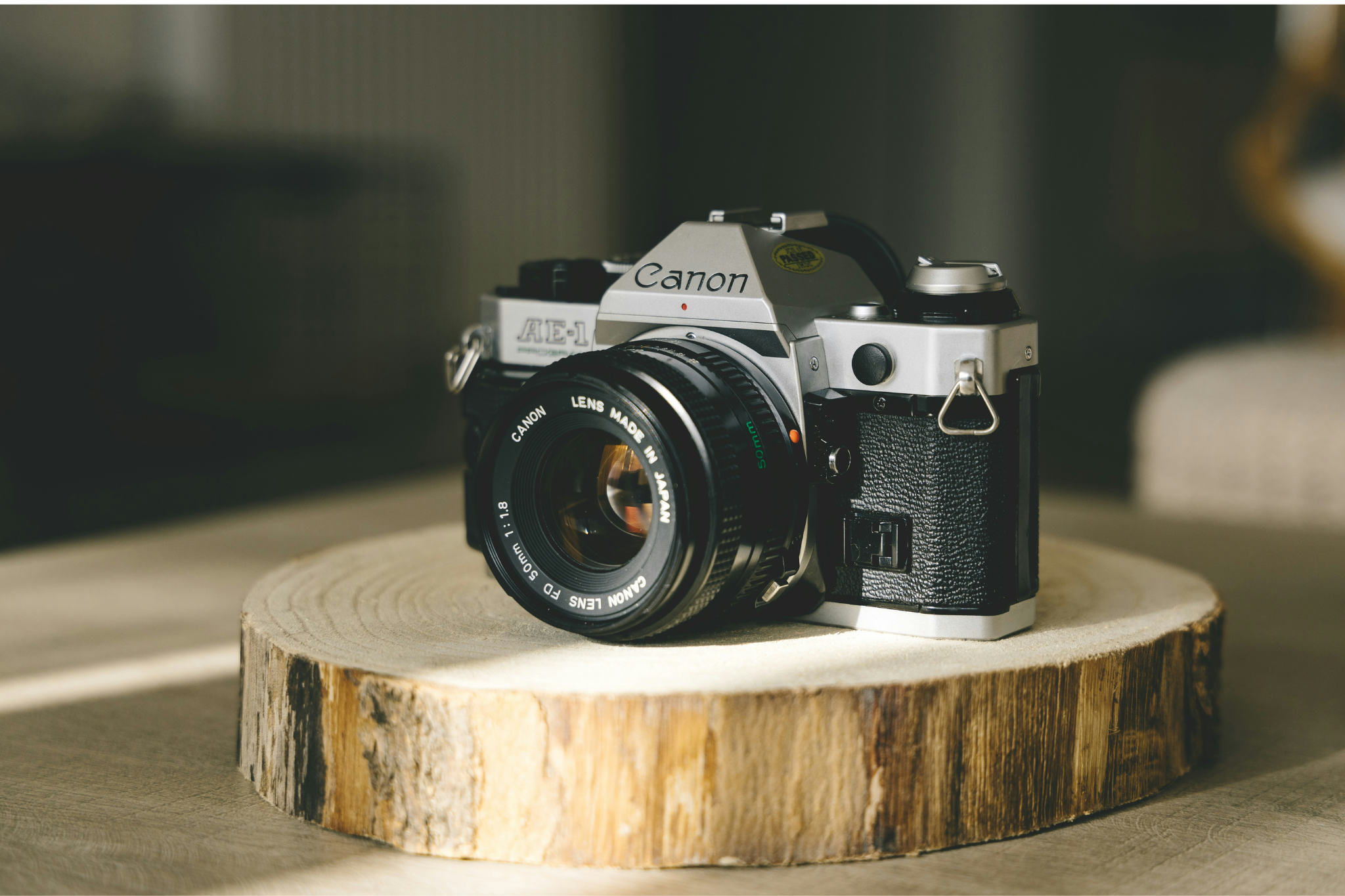
The Canon AE-1, Fujifilm X-T1, and Sony A7 all got mocked at launch. Time — and the used market — had the last word.
Picture a flea market on a Saturday morning. Low light, dusty tables, the smell of old leather and motor oil in the air. Somebody pulls a black SLR body from a shoebox, blows the dust off the lens mount, and holds it up to the light. A Canon AE-1. Knobs worn smooth, leatherette cracked at the corners, every sign of a life well-lived. The price tag reads $175. Five years ago, that was a ripoff. Today? It’s a deal.
Here’s the thing the photography industry is quietly reckoning with: the cameras that got laughed out of reviews — the ones critics called “plasticky,” “overly automated,” “trying too hard,” or “a solution in search of a problem” — are the very cameras collectors, working photographers, and first-time buyers are now hunting down. The used market doesn’t lie. And right now, it’s telling a story about three cameras in particular.
Let’s set the record straight on each one.
The Canon AE-1: Too Automated to Be Taken Seriously (Until It Wasn’t)
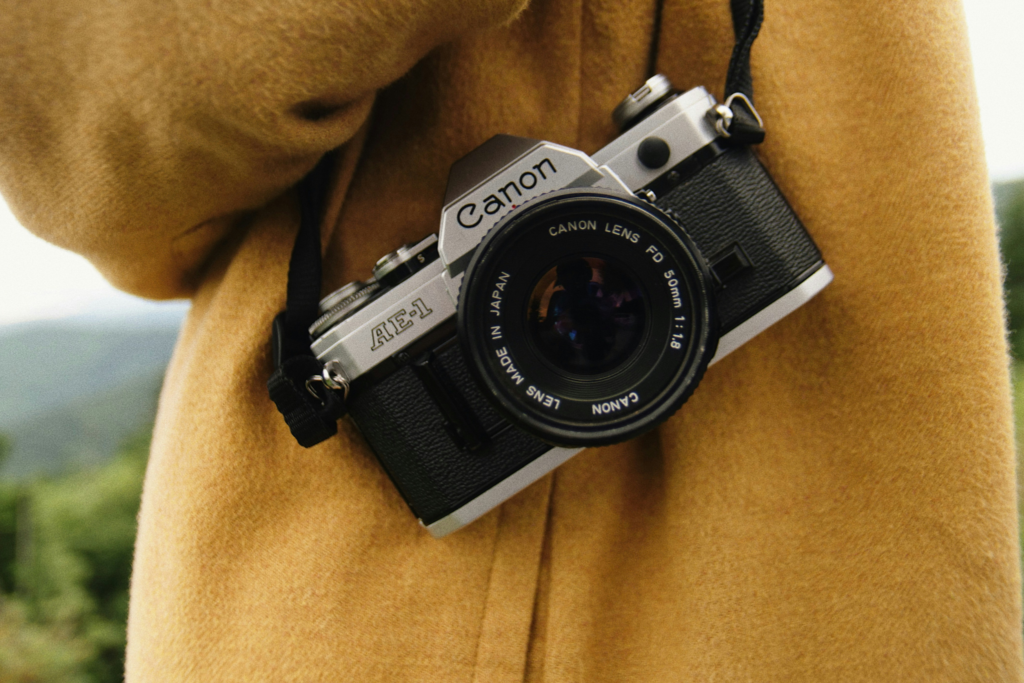
The year is 1976. Canon releases the AE-1 — the world’s first microprocessor-controlled SLR camera — and the photography establishment promptly loses its mind. Not in a good way.
Serious photographers of the era had a rule: real cameras were mechanical. Real cameras rewarded craft. Real cameras didn’t need a circuit board to figure out your shutter speed. The AE-1 was, in the eyes of the purists, a cheat. It simplified. It automated. It sold to beginners. Canon even ran TV commercials for it, which was basically the photographic equivalent of showing up to a gallery opening in sweatpants.
The critics weren’t entirely wrong about what the AE-1 was. They were completely wrong about why it mattered.
Over eight years of production, Canon sold more than one million AE-1 bodies — a number that had never been achieved by an SLR manufacturer. It democratized shutter-priority exposure, putting professional-adjacent tools into the hands of photographers who couldn’t afford Leica or Nikon’s professional lines. The “cheap” camera turned out to be the camera that got a generation hooked on photography.
Fast forward to now. The analog photography boom is real, and it isn’t slowing down. Film sales from Kodak and Ilford have climbed for years running. Canon even unveiled a retro concept camera at CP+ 2026 in Yokohama — with an AE-1 successor, the RE-1, reportedly in development and estimated to arrive at a $1,500–$2,000 price point. Canon. Building a retro mirrorless. Because the AE-1 became that culturally significant.
In the used market, similar-era bodies like the Canon A-1 have fully doubled in value over recent years, and the AE-1 itself regularly sells between $150–$250 for a working body with a lens — a camera that once sat in shoeboxes at estate sales for the price of a pizza.
Find Canon AE-1 listings on GearFocus → gearfocus.com/search?q=canon+ae-1
The Fujifilm X-T1: “Why Does It Look Like a Film Camera?” Was Never an Insult
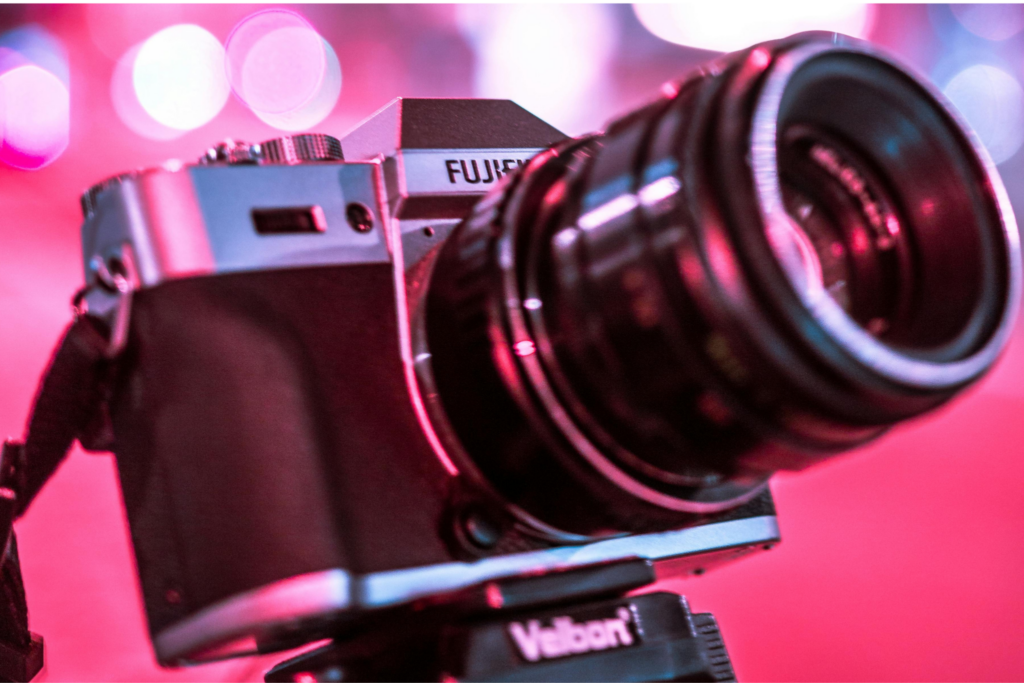
The X-T1 hit shelves in early 2014, and the reaction from parts of the photography internet was, let’s say, confused.
Fujifilm had made something that looked — deliberately, defiantly — like an old film SLR. Physical dials for ISO, shutter speed, and exposure compensation. A prominent, hulking viewfinder hump. A body that felt more at home in 1985 than 2014. When every other camera manufacturer was racing toward sleek, touchscreen-forward minimalism, Fujifilm zigged hard in the other direction. Some reviewers found it charming. Others found it performative.
And then there was the EVF. That massive electronic viewfinder — 0.77x magnification, the largest in any mirrorless camera at the time — divided people almost as much as the design. Too big. Too conspicuous. Makes the whole camera look unbalanced. That was the take.
Alright. Let’s look at where things stand today.
The X-T1’s EVF is now widely regarded as one of the finest viewfinder experiences ever put in an interchangeable lens camera. Fujifilm’s film simulations — Provia, Velvia, Classic Chrome — have become as close to a cultural institution as camera software gets. The camera’s X-Trans II sensor produces files that still compete with more recent hardware in the hands of a photographer who knows what they’re doing. And that “old film camera” aesthetic? It turns out an entire generation of photographers grew up watching their parents shoot on film and finds the physical, tactile experience of the X-T1 deeply appealing.
The used market speaks accordingly. Clean X-T1 bodies are currently trading in the $350–$500 range — solid money for a ten-year-old APS-C camera. More telling: demand hasn’t collapsed the way it does for comparable bodies from Sony or Canon’s mirrorless lines. The X-T1 holds value because people still want it, not because sellers are holding out hope.
There’s a lesson here about design contrarianism. Fujifilm didn’t accidentally make a camera that looked like an old film SLR — they made it that way because they understood something their competitors didn’t. Tactility matters. The physical experience of shooting matters. And it turns out, given a decade to marinate, the market agreed.
Find Fujifilm X-T1 listings on GearFocus → gearfocus.com/search?q=fujifilm+x-t1
The Original Sony A7: Criticized Into Greatness
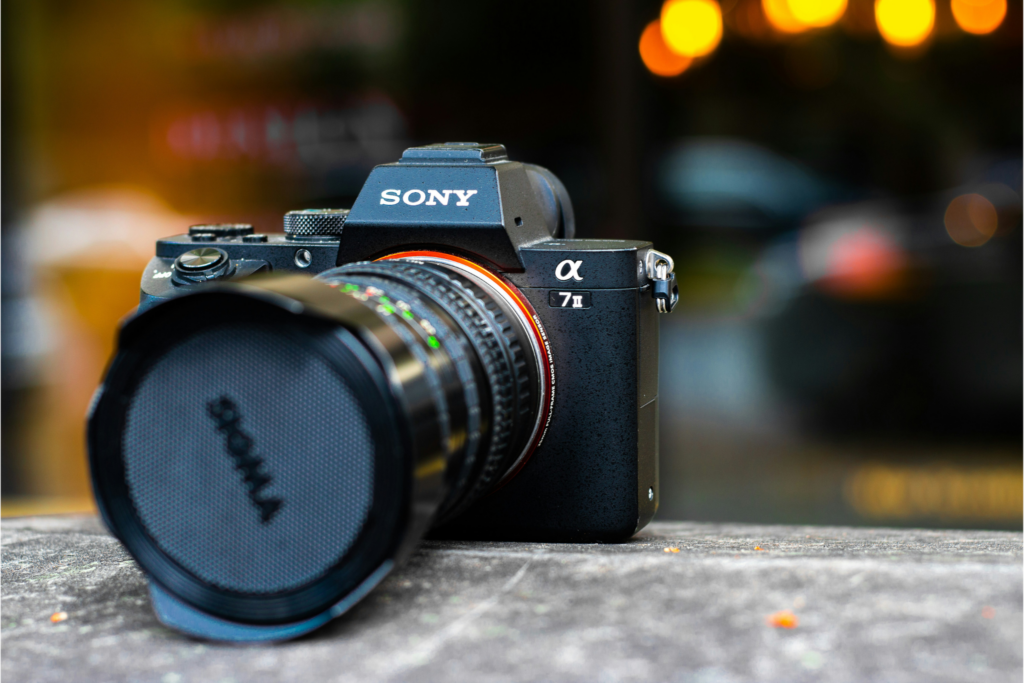
Here’s an uncomfortable truth: the original Sony A7, released in late 2013, was a pretty easy camera to mock.
The grip was shallow. The battery life was, charitably, alarming — under 300 shots per charge under normal conditions. The autofocus, by modern standards, was merely adequate. The body felt hollow compared to the metal-clad full-frame DSLRs it was competing against. At launch, the consensus was something like: interesting concept, rough execution. Nice try, Sony.
What nobody fully appreciated in 2013 was that Sony had just cracked the full-frame mirrorless market wide open. The A7 wasn’t a finished product — it was a proof of concept for an entirely new category of camera. Sony was betting that a full-frame sensor in a compact, E-mount body would eventually attract a lens ecosystem to match. Spoiler: it worked.
The A7 line is now Sony’s flagship creative platform. The A7 V, A7R V, A7C II — an entire architecture of professional cameras — all trace their lineage back to the “rough” original that critics dismissed. And the original itself? It now sells second-hand for under $300 in many markets — sometimes less. Full frame. 24 megapixels. E-mount compatibility with every Sony FE lens ever made. For less than $300.
That’s not a bad camera getting cheap. That’s a paradigm-shifting piece of technology becoming accessible to anyone who wants it.
The photographers picking up original A7s in 2025 and 2026 aren’t settling. They’re making smart, deliberate decisions. A full-frame sensor for under $300 on the used market is a tool any working photographer — or any photographer trying to become working — should take seriously. The battery life issue is solved by buying three cheap batteries. The AF issue largely disappears with modern E-mount glass. What remains is one of the most capable sensor platforms ever built, at a price point that would’ve seemed impossible when it launched.
Find Sony A7 listings on GearFocus → gearfocus.com/search?q=sony+a7
Why the Market Keeps Vindicating the “Wrong” Camera
There’s a pattern here worth naming. Each of these cameras violated the aesthetic or technical consensus of its moment. The AE-1 was “too cheap and automated.” The X-T1 was “too retro and chunky.” The A7 was “too rough and compromised.” And in each case, time — and real photographers doing real work — proved the consensus embarrassingly wrong.
The used gear market is one of the few honest feedback mechanisms in photography. It doesn’t care about review scores or launch-day Twitter arguments. It cares about what photographers actually reach for. And the cameras that hold demand — or grow it — tend to be the cameras that solved a real problem, even if the solution looked weird at the time.
The deeper lesson: don’t buy cameras for how they look on a spec sheet. Buy them for what they let you make. The cameras being laughed at in 2024 might be the ones everyone’s fighting over by 2030. Keep your eyes on the ones doing something genuinely different.
And maybe check the used market before you assume something has aged out.
Frequently Asked Questions
Is the original Sony A7 still worth buying in 2026?
For most photographers — especially those entering full-frame for the first time — yes, absolutely. The sensor delivers excellent image quality, E-mount compatibility opens up a massive lens library, and current used prices make it one of the most accessible full-frame options on the market. The main tradeoffs are battery life (bring extras) and autofocus performance compared to current generation bodies. For studio work, street photography, portraits, or landscape shooting where burst AF isn’t critical, it remains a capable, well-priced tool.
Why did the Canon AE-1 become so popular again?
Multiple forces converged. The broader film photography renaissance — driven partly by Gen Z creators attracted to analog’s aesthetic and intentional pace — lifted demand for accessible 35mm SLRs. The AE-1’s combination of beginner-friendliness, durable construction, and affordable FD lens ecosystem made it a natural entry point. Social media, particularly TikTok, amplified analog aesthetics to audiences who hadn’t previously considered film. And nostalgia from older photographers who shot AE-1s in the 70s and 80s added a collector dimension to already rising demand.
What made the Fujifilm X-T1’s design “controversial” at launch?
In 2014, the dominant design direction in mirrorless cameras was toward minimal, modern bodies — think Olympus PEN or early Sony NEX lines. The X-T1’s deliberately retro aesthetic, prominent EVF hump, and analog-style physical dials broke from that convention. Some reviewers found the design nostalgic and appealing; others felt it was affectation. With a decade of hindsight, the design philosophy proved foundational — Fujifilm doubled down on it through the entire X-T line, and it became one of the brand’s defining strengths.
Looking for any of these bodies? GearFocus lists pre-owned photography gear from verified sellers — browse current X-T1, A7, and AE-1 listings while they last.