For most working photographers, the best high resolution camera 2026 has to offer is the Sony A7R VI, not the Hasselblad X2D 100C. The Hasselblad wins on pure file quality. The Sony wins on autofocus, lens choice, and the ability to earn money on deadline.
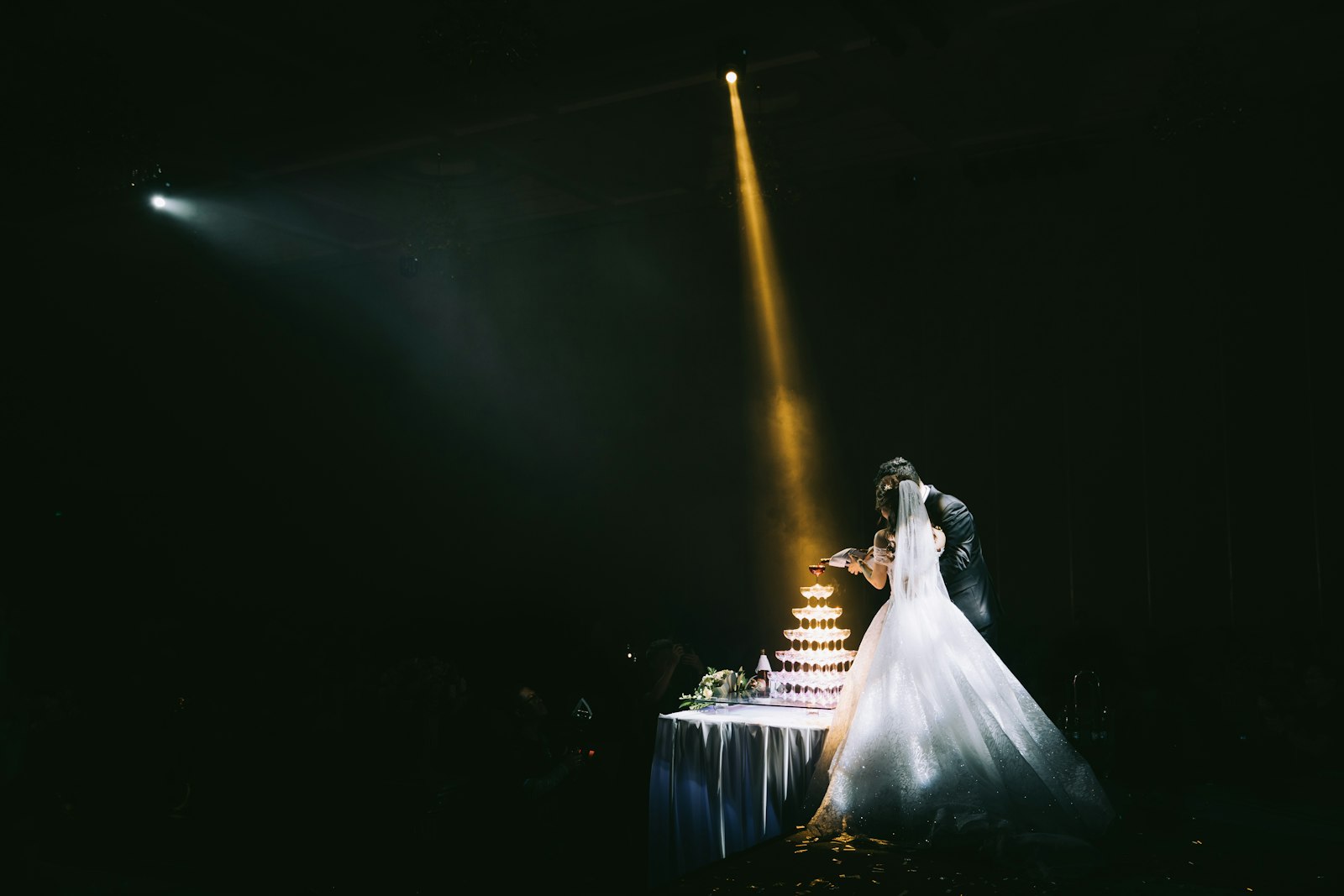
Eleven at night in a hotel ballroom, the chandeliers dimmed to that orange nothing light, and I’m shooting a last dance at ISO 8000 because the couple asked for it and the venue said no to anything resembling a light stand. My shoulder aches. The card light blinks. Somewhere in that mess of grain and motion is a frame that will end up printed four feet wide over a fireplace.
That ballroom is where arguments about resolution go to die. Or where they get decided, depending on who you ask.
Matt Granger put the question on the table this month with a head-to-head between Sony’s new A7R VI and Hasselblad’s X2D 100C, framed around which one takes the crown for the best high resolution camera 2026 can claim. It’s a good comparison. It’s also a comparison that quietly assumes the reader’s job looks nothing like that ballroom.
The Two Candidates for Best High Resolution Camera 2026
Here’s where the two cameras sit relative to each other, stripped of marketing language. Figures below describe each camera’s basic category and format, which is all anyone needs to understand the shape of the choice.
| Attribute | Sony A7R VI | Hasselblad X2D 100C |
|---|---|---|
| Format | Full-frame mirrorless | Medium format |
| Design priority | Speed and versatility | Image quality and tonality |
| Lens ecosystem | Sony E-mount, very broad | Hasselblad XCD, deliberately narrow |
| Typical use | Commercial, event, editorial, landscape | Studio, fine art, landscape, product |
| Handling character | Fast, configurable, busy | Slow, minimal, contemplative |
That table is the whole argument in miniature. One camera is built to keep up with you. The other is built to make you slow down. Neither of those is a flaw. They’re just different bets about how photographs get made.
You can watch the full comparison that kicked this off on Matt Granger’s channel, and I’d recommend it. Just read it the way you’d read a track test of a sports car: informative about the machine, silent about your commute.
What Does “Best High Resolution Camera 2026” Actually Mean to a Working Photographer?
This is the question nobody asks before they answer it. Best at what? Best measured how? Best for the person who shoots twelve frames in a studio day, or best for the person who shoots four thousand frames at a Saturday wedding?
When a reviewer crowns the best high resolution camera 2026, they usually mean the camera that produces the most information per frame under controlled conditions. Tripod. Studio strobe. Static subject. Perfect technique. Under those conditions, medium format tends to win, and the Hasselblad is a genuinely beautiful instrument.
But a working photographer’s definition of the best high resolution camera 2026 includes things that never show up in a sensor test. Can it nail an eye in a dark room? Can you rent a replacement body in a strange city on four hours’ notice? Does the lens you need for this particular job exist at all?
I learned that the hard way. I once showed up to a corporate headshot day with a beautiful slow prime and no backup, convinced the files would justify the inconvenience. They did. The client, who needed ninety people photographed between 9am and 1pm, did not care about the files. That’s a mistake I only made once.
The Case for the Hasselblad as Best High Resolution Camera 2026
Let’s be fair to the Hasselblad, because dismissing it as a rich hobbyist’s camera is lazy and wrong.
Medium format gives you something full-frame simply cannot fake: a tonal roll-off in skin and sky that behaves differently as it approaches highlight clipping. Big files with big photosites hold gradation in a way that survives aggressive retouching. If your business is beauty, high-end product, or gallery landscape, that’s not a spec sheet luxury. It’s the product you sell.
The X2D’s handling also deserves credit as a creative tool rather than a limitation. Fewer buttons. Fewer menus. A shooting rhythm that pushes you to think before the shutter rather than after it. Anyone arguing about the best high resolution camera 2026 purely on autofocus points is missing that the camera’s slowness is a feature for some kinds of work.
Strengths worth naming plainly:
- Tonal quality: Medium format files reward heavy grading and large prints in ways that show up at viewing distance, not just at 200% on a monitor.
- Deliberate handling: A minimal interface that encourages slower, more considered shooting.
- Lens character: The XCD line is small, expensive, and uniformly excellent rather than broad and uneven.
- Client perception: In certain rooms, the camera itself signals a tier of work. That’s shallow, and it’s also real.
Limitations are just as plain. The autofocus is not built for chaos. The lens catalogue is narrow and costly. Rental and service availability is thin outside major markets. And if a body fails mid-job, your contingency plan is considerably more complicated than driving to the nearest camera shop.
The Case for the Sony as Best High Resolution Camera 2026
The A7R VI’s pitch is less romantic and more useful: very high resolution attached to a camera that behaves like a modern working tool. Fast, confident autofocus. A deep and genuinely competitive lens ecosystem. Bodies available to rent in most cities on short notice. Service networks that exist.
For a photographer who shoots a mix of work, that combination is what makes it the best high resolution camera 2026 offers in practical terms. You can take it from a tripod-mounted architectural interior in the morning to a moving portrait subject in the afternoon without changing systems or apologising to anyone.
There’s also the quiet advantage of a large resolution file in a camera you already know. Muscle memory has cash value. Every hour not spent relearning a menu system is an hour spent on the actual photograph.
Strengths, stated flatly:
- Autofocus reliability: Subject tracking that holds up in low light and motion, which is where most paid work actually happens.
- Lens breadth: First-party and third-party options across nearly every focal length and budget.
- Logistics: Rentals, repairs, and replacements are available almost everywhere.
- Hybrid capability: Stills and motion from one body, which matters more each year as clients bundle deliverables.
The honest limitations: full-frame files will not match medium format for highlight gradation under studio control. High-resolution sensors punish sloppy technique, so shutter discipline and lens quality matter more than they did on a 24-megapixel body. And the interface is dense. Anyone calling it the best high resolution camera 2026 should admit it has more menu depth than any human needs.
Who Should Buy Which?
The split is cleaner than the debate suggests. If your income comes mostly from controlled environments where you dictate the pace, the Hasselblad is a legitimate answer to the best high resolution camera 2026 question and will likely make your work better.
If your income depends on unpredictable light, moving subjects, deadlines, or clients who change the plan at 6pm, the Sony is the answer. Not because it’s a better camera in the abstract, but because it is a better instrument for that job, and a camera that misses the moment has no resolution at all.
Most readers of this site fall in the second group. That’s not a judgement. It’s just where the money is.
What the A7R VI Means If You Own an Aging A7R Body
Here’s the part of the best high resolution camera 2026 conversation that actually affects most people’s bank accounts. New flagship releases push older bodies onto the used market. A7R V and A7R IV owners upgrade, and their old bodies have to go somewhere.
If you’ve been shooting an A7R III or IV and feeling the itch, this is the moment to be honest about what’s limiting your work. In my experience it’s usually not the sensor. It’s the autofocus on moving subjects, or the buffer, or the fact that you’ve been running one body with no backup for three years and telling yourself it’s fine.
I did exactly that once, right through an entire autumn of portrait sessions, and the only reason it ended well is luck. Not planning. Luck. If a second body costs less than the upgrade, buy the second body first.
Used A7R prices tend to move in waves after a new release, and condition grading varies wildly between sellers. You’ll see the same model listed at very different money on eBay, at dealers, and on GearFocus, and the gap is usually shutter count and cosmetic condition rather than anything meaningful. Read the listings carefully.
For a closer look at whether that jump makes sense, our piece on whether working photographers should upgrade from the A7R V goes through the calculation in detail. If you’re earlier in your career and weighing a cheaper entry point, the A7 III as a student camera body in 2026 covers that end of the market.
Does Resolution Even Matter for Your Clients?
Uncomfortable truth time. Most commercial deliverables end up on a screen at a fraction of native resolution. Most wedding galleries get viewed on phones. Most corporate headshots live in a 400-pixel circle on a website.
So why chase the best high resolution camera 2026 at all? Two reasons that survive scrutiny: cropping freedom and print ceiling. Being able to crop hard and still deliver, and being able to say yes when a client asks for a gallery-scale print, are both worth real money.
Everything else is often ego. I include my own purchases in that. The best high resolution camera 2026 can’t fix a weak composition, and it absolutely cannot fix a client relationship you’ve let go cold.
What To Take From This
- The Hasselblad wins the file: Superior tonality and gradation under controlled conditions, which matters for beauty, product, and fine art.
- The Sony wins the job: Autofocus, lens breadth, and logistics make it the best high resolution camera 2026 provides for most working shooters.
- Define “best” before you shop: Best under studio control and best on a chaotic Saturday are different cameras.
- Backup beats upgrade: If you’re running one body, a second body is a better purchase than a newer one.
- Watch the used wave: New flagship releases push A7R IV and A7R V bodies onto the used market at varied condition grades.
- Resolution buys crop and print: Everything beyond that is preference, not necessity.
The Verdict
Both cameras are excellent. Only one is the right tool for the way most readers here actually earn a living. The Hasselblad X2D 100C makes files I’d love to hold. The Sony A7R VI makes a living, which is the less poetic and more urgent concern.
If you shoot in rooms you control, buy the Hasselblad and don’t let anyone talk you out of it. If you shoot in rooms that control you, the best high resolution camera 2026 can sell you is the Sony, and the money saved is better spent on glass, a backup body, and a week off.
FAQ
Is medium format always better than full-frame for resolution?
Not always. Medium format typically delivers better tonal gradation and highlight roll-off under controlled conditions, but full-frame high-resolution bodies can match or exceed it in practical sharpness once autofocus and handling are factored into real shooting situations.
Should I sell my A7R IV to upgrade?
Only if the older body is actively limiting paid work. If autofocus and buffer are the bottleneck, upgrading helps. If you lack a backup body, buying a second body first is the safer business decision.
Do clients notice the difference between these cameras?
Rarely in isolation. Differences show up in large prints and in heavily retouched beauty work. For screen delivery, web galleries, and standard print sizes, most clients cannot distinguish the two files.
Is high resolution worth it for wedding photography?
Resolution helps with cropping freedom and album print sizes, but autofocus reliability in low light matters far more. A camera that misses focus at the first dance has no useful resolution at all.
Will A7R V prices drop after the A7R VI release?
New flagship releases generally push previous-generation bodies onto the used market as owners upgrade. Condition, shutter count, and seller type drive most of the price variation you’ll see between listings.