
The Astrhori 85mm f/1.8 II sits at the center of this week’s reading for one reason: budget portrait glass has stopped being a compromise and started being a decision. Christopher Frost’s review is the anchor. What surrounds it is a market that has quietly changed the math on every 85mm purchase you’ll make this year.
Here’s the thread I kept pulling on this week. For roughly fifteen years, the honest advice to a photographer asking about an 85mm was: save up, buy the first-party lens, stop looking at the cheap stuff. That advice was correct. It is no longer automatically correct, and the Astrhori 85mm f/1.8 II is a decent place to watch that shift happen in real time.
I’m not going to pretend this is a settled question. It isn’t. But the reading below, taken together, says something uncomfortable to anyone still repeating the old line without checking whether it holds.
The Pick: Christopher Frost on the Astrhori 85mm f/1.8 II
Christopher Frost’s review of the Astrhori AF 85mm f/1.8 II covers the four things that actually decide whether a portrait lens earns a slot in your bag: build quality, autofocus, sharpness, and value. That’s the whole job. No lifestyle b-roll, no unboxing theater.
My take: the value axis is doing more work here than most reviews acknowledge. When a lens costs a fifth of its first-party equivalent, “sharpness” stops being a pass/fail and becomes a ratio. Is it 80 percent as good for 20 percent of the money? For a second body on a wedding day, 80 percent is plenty. For a paid headshot session where the client pixel-peeps the file, it might not be.
What a working photographer should walk away with: watch the autofocus section twice. Optical quality in budget glass caught up years ago. Autofocus reliability under pressure is where the gap still lives, and it’s the only spec that can actually cost you a frame you can’t reshoot.
Why the Astrhori 85mm f/1.8 II Belongs Next to the Viltrox 135mm Conversation
Our own Viltrox LAB 135mm f/1.8 review made an argument I keep coming back to: the third-party portrait lens is no longer the backup plan. It’s frequently the plan.
Read that alongside the Astrhori 85mm f/1.8 II and a pattern emerges. Different manufacturers, different focal lengths, same underlying story. The optical engineering has commoditized. The differentiator has migrated to firmware, weather sealing, and how the lens behaves on the two hundredth frame of a hot afternoon.
The takeaway for your kit planning: stop asking “is the cheap one good enough?” and start asking “which specific failure mode would end my day?” Those are different questions with different answers, and only the second one is useful.
The Meike 85mm Piece, Reconsidered
Our Meike 85mm f/1.8 coverage framed that release as market disruption. Six months on, with the Astrhori 85mm f/1.8 II in the same conversation, “disruption” undersells it. This is a segment, not an event.
Here’s my genuinely contrarian read: the flood of affordable 85mm options is quietly bad for a certain kind of photographer. Not because the lenses are bad. Because cheap options make gear acquisition feel like progress. I’ve absolutely done this. I bought a second portrait lens during a slow stretch one winter and shot maybe forty frames with it before selling it on, because the problem was never the focal length. It was that I had no clients booked.
What to take from it: the Astrhori 85mm f/1.8 II is a legitimate tool. It is not a substitute for a booking calendar.
The Premium Counterweight
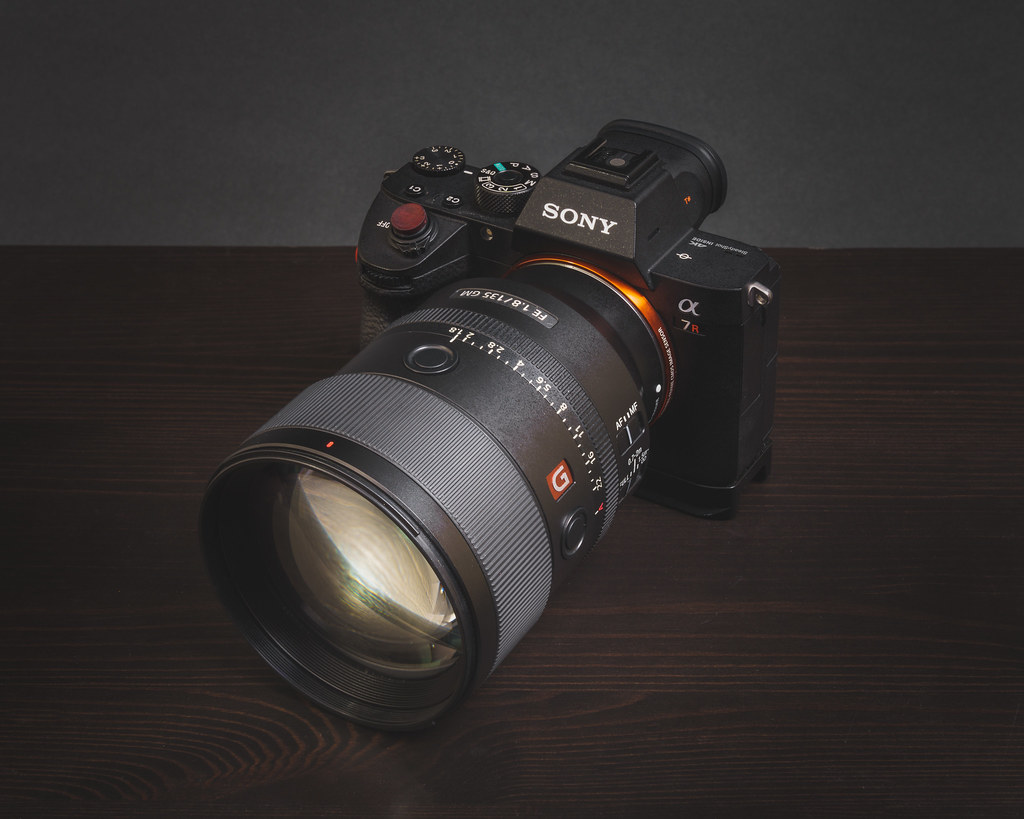
Set the Astrhori 85mm f/1.8 II against our Canon RF 70-200mm f/2.8L IS USM Z review and the budget-versus-premium argument stops being abstract.
Premium glass buys you three things: reliability under load, resale stability, and service infrastructure. That’s it. It does not buy you a look your clients can identify in a lineup. Anyone who tells you otherwise is selling something.
My analysis: if you shoot weddings through this August and September stretch, where a failure is unrepeatable, the premium argument survives. If you shoot fall senior portraits, where you can reshoot, the Astrhori 85mm f/1.8 II math looks very different. Used prices on both tiers swing hard by condition anyway, and you’ll see the same 85mm listed at wildly different money across eBay, KEH, and GearFocus depending on who’s describing the glass honestly.
PFYI Take
The budget lens question was never about optics. It was about which specific catastrophe you can afford to survive, and the Astrhori 85mm f/1.8 II is the current best test case for asking yourself that honestly.
If You Only Read One
Christopher Frost’s review of the Astrhori 85mm f/1.8 II. It’s the only piece this week that gives you the four data points you actually need to make the call, in the order that matters. Watch the autofocus segment, then decide.
One last confession before you go: I resisted third-party glass for years on pure snobbery, and it cost me money I didn’t have. The Astrhori 85mm f/1.8 II probably isn’t the right lens for every photographer reading this. But if the only reason you’re dismissing the Astrhori 85mm f/1.8 II is the badge on the barrel, that’s not a technical objection. That’s the same mistake I made, wearing better clothes.
Photo: Bilal Izaddin