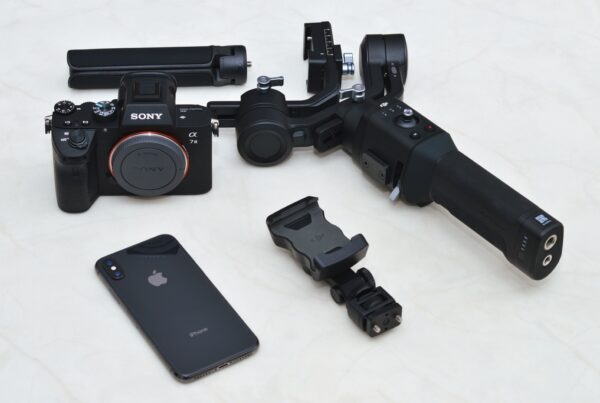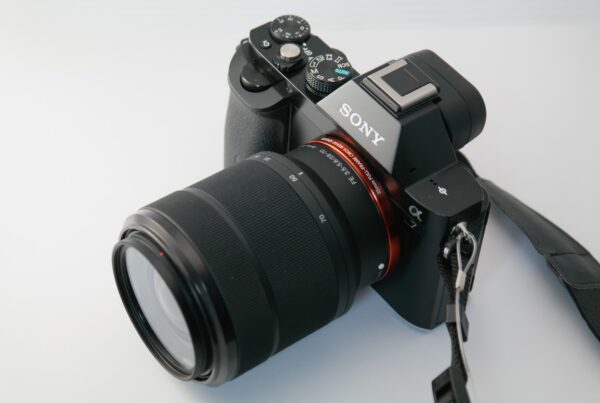
The Sigma FP2 news is simple: Sigma announced a second-generation compact modular full-frame hybrid, slightly smaller than the original FP but with more power. For stills shooters, the real question is whether a cinema-leaning modular body can hold up as a working stills camera.
Sigma has announced the FP2, the follow-up to its tiny modular full-frame camera, and the pitch from the company is a slightly smaller body carrying more power than the original, according to No Film School. That’s the whole headline. The rest is what we do with it.
Most coverage of this camera is going to be written for people cutting footage. I want to talk about the other half of the room: the photographers who shoot stills for money and keep wondering whether a body this small could actually carry a job.
What the Sigma FP2 News Actually Says

Here is the honest boundary of the Sigma FP2 news as it stands today: a second-generation compact modular full-frame hybrid, a body that’s slightly smaller than the first FP, and a promise of more power. That’s what Sigma has put on the table.
I’m not going to pretend to know the sensor, the buffer, or the autofocus behavior, because nobody outside Sigma does yet. Anyone writing confident performance verdicts off an announcement is guessing, and I’ve been burned reading those guesses before.
So treat this piece as orientation rather than a verdict. The Sigma FP2 news gives us a shape, a philosophy, and a direction. It doesn’t give us a shutter count on a wedding day.
Why Should Stills Shooters Care About Sigma FP2 News at All?
Because the original FP solved a problem a lot of us pretend we don’t have. Carrying a full-frame kit all day is a physical tax. By hour nine of a reception, the body on your shoulder stops being a tool and starts being a负担 you resent.
A genuinely small full-frame body changes what you’re willing to bring. Not as your main rig, maybe. As the camera that’s actually with you when something happens.
That’s the angle in this Sigma FP2 news that matters to stills work. Modularity means you can strip it down to almost nothing, or build it up with a cage and a grip when the job demands it. Few systems let you make that choice on a per-shoot basis.
The Modular Trade-Off Nobody Mentions
Modular sounds like freedom. In practice it’s also a bag full of parts you have to remember.
I once showed up to a portrait session having left the one bracket that made my setup usable sitting on my kitchen counter. Shot the whole thing improvising. The images were fine. My blood pressure wasn’t.
Cinema-leaning bodies also tend to make choices that stills shooters feel immediately: unconventional shutter behavior, different handling priorities, menu systems built around recording rather than frames. The Sigma FP2 news doesn’t tell us how much of that survives in generation two, and that’s the single biggest unknown here.
Sigma’s optics, though, have earned real trust with working photographers. If you’ve read our take on the Sigma 85mm f/1.2 Art lens, you know the company has been shipping glass that competes on merit, not price alone. The Sigma 20-60mm F2.8-4 fits this kind of body particularly naturally.
How Sigma FP2 News Fits the Late-2026 Buying Landscape

Timing matters. We’re at the end of October, wedding season has wound down in most of the country, and this is exactly when photographers start doing cold math about next year’s kit.
That makes the Sigma FP2 news land at a useful moment. You have months before the spring calendar fills to see real reviews, handle one, and decide honestly whether a second body belongs in your plan at all.
It also arrives into a crowded compact full-frame field. The Canon EOS R8 II launch covered similar territory for shooters who want light full-frame without the modular commitment. Sigma FP2 news should be read against that, not in isolation.
And a confession: I have historically been wrong about small cameras. I dismissed a compact body years ago as a toy, then watched a colleague make better frames with it than I was making with twice the weight. The gear wasn’t the limitation. I was.
What To Do With This Sigma FP2 News Right Now
- Don’t preorder on an announcement. The Sigma FP2 news confirms existence and direction, not stills performance.
- Audit your actual pain. If weight isn’t what’s hurting your work, a smaller body won’t fix it.
- Think second body, not replacement. That’s where this class of camera historically earns its keep.
- Wait for autofocus testing. For event and portrait shooters, that’s the whole ballgame.
Sigma has built enough credibility with working photographers that the Sigma FP2 news deserves attention rather than reflex skepticism. Just keep your wallet closed until somebody actually shoots stills with it.
FAQ
Is the Sigma FP2 a stills camera or a cinema camera?
Sigma positions it as a hybrid. The Sigma FP2 news describes a modular full-frame body, which historically leans cinema-friendly, but stills capability is central to the hybrid framing.
How much smaller is the FP2 than the original FP?
Sigma says slightly smaller. No precise dimensions have been confirmed in the announcement coverage, so treat specific size comparisons as unverified until full specifications are published.
Should I sell my current body based on this announcement?
No. Nothing in the Sigma FP2 news establishes real-world autofocus, buffer, or handling performance for stills work. Wait for independent testing before changing your kit.