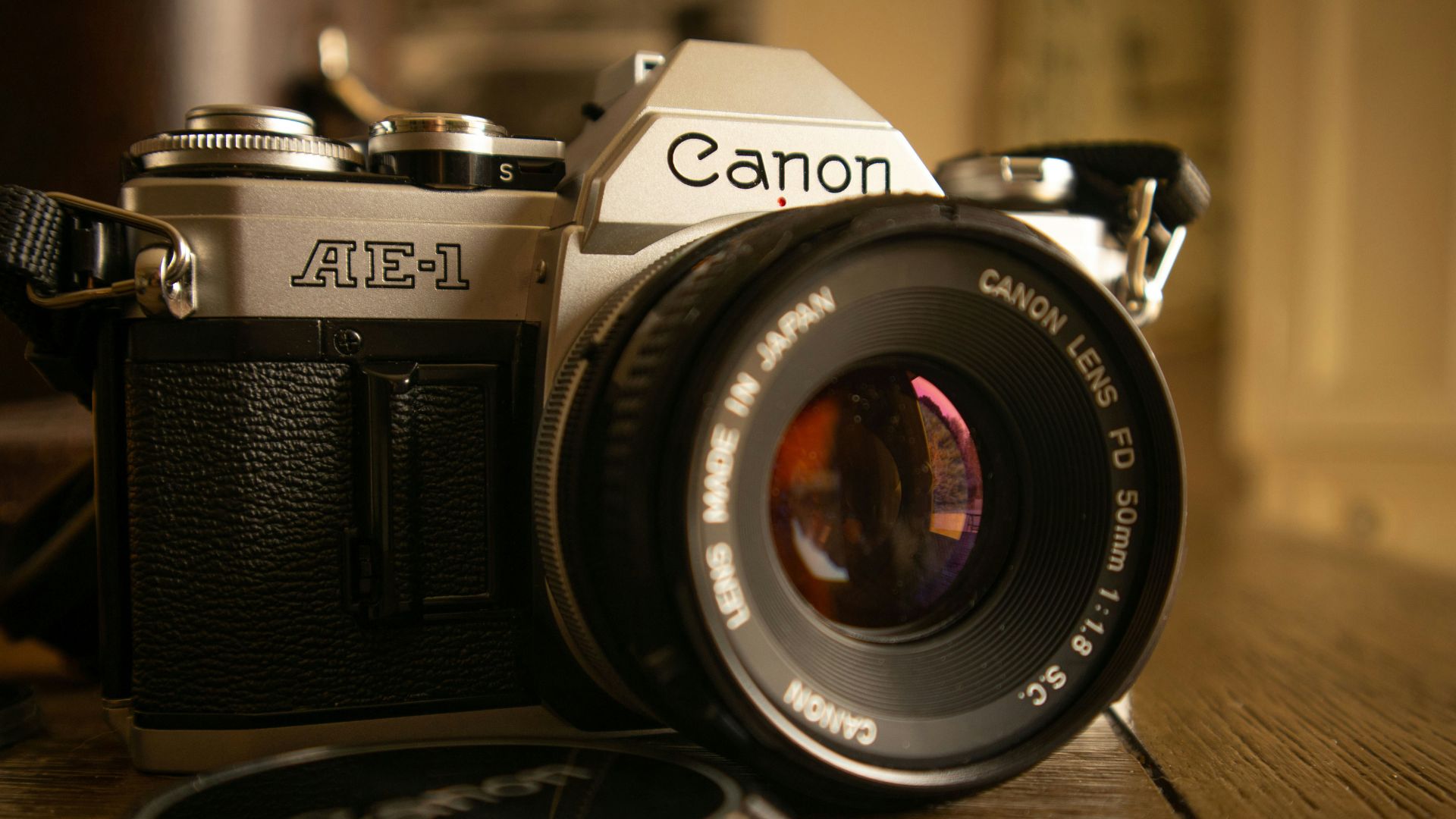
April 2026 marks the 50th anniversary of one of the most consequential cameras ever manufactured. Not the most technically sophisticated. Not the most expensive. The most consequential — because the Canon AE-1 fundamentally changed who could afford to take photography seriously, and the industry has never fully recovered from the disruption it caused.
That disruption is worth understanding in detail, because the camera’s legacy is directly relevant to what Canon may be preparing to announce right now.
Why the AE-1 Changed Everything
Before 1976, automatic exposure metering on a 35mm SLR was a premium feature reserved for high-end models. The market was dominated by fully mechanical cameras that required their operators to understand exposure, metering, and shutter priority before producing a usable image. This kept the 35mm SLR in the hands of professionals and committed hobbyists. Everyone else shot point-and-shoot.
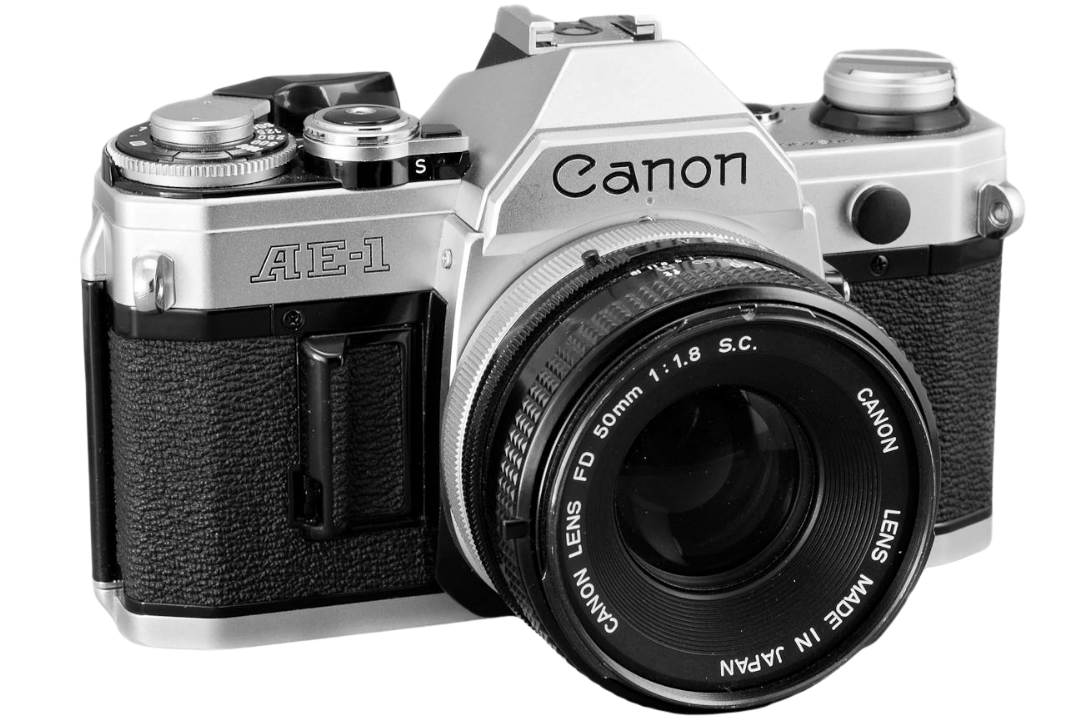
Canon broke that pattern with the AE-1. According to Canon’s own historical documentation, the AE-1 was the world’s first 35mm SLR to incorporate a Central Processing Unit — a microprocessor, in a camera body, in 1976. That single engineering decision eliminated approximately 300 mechanical components from the design, dramatically reduced manufacturing costs, and made shutter-speed priority automatic exposure standard rather than premium.
The result was a camera priced at $199.95 at launch — roughly $1,100 in 2026 dollars — that delivered capabilities previously available only at two to three times the cost. Canon backed it with the first national television advertising campaign in Japanese camera manufacturing history, featuring world-renowned athletes and targeting a mass consumer audience that had never considered buying an SLR.
It worked. Canon sold 5.7 million AE-1 units over its production run — the first 35mm SLR to break one million, then five million. It became the default learning tool for college photography programs across the United States. It was the camera professors told students to bring on the first day. It didn’t just expand Canon’s market share. It expanded the photography market itself.
The AE-1’s technical specifications remain solid by any standard: shutter speeds from 2 seconds to 1/1000th, the Canon FD mount with access to over 50 lenses, a 0.86x viewfinder magnification, and compatibility with dedicated Speedlite flashes for automatic flash exposure.
“The AE-1 didn’t just expand Canon’s market share. It expanded the photography market itself.”
50 Years Later: Where the AE-1 Stands in the Used Market
Cameras discontinued in 1984 typically disappear from meaningful commercial activity within a decade. The AE-1 did not follow that pattern.
In the current market, a fully functional Canon AE-1 body in good condition sells for $100–$200, with complete kits including the FD 50mm f/1.8 lens and original accessories commanding more. Detailed price analysis from Petervis puts working kits between £70–£150 in the UK depending on condition, with clean black-body variants in higher demand due to their aesthetic appeal. Black versions are rarer; they command a consistent premium over the standard silver-and-black configuration.
The durability of AE-1 demand comes from two intersecting sources. First, the camera is genuinely excellent to shoot with. The FD 50mm f/1.8 renders with a warmth and character that photographers actively seek, and the camera’s ergonomics reward experienced shooters while remaining approachable to beginners. Second, the AE-1 occupies a unique cultural position: it is the camera that taught a generation of photographers. For younger shooters arriving at film without prior experience, buying an AE-1 carries a specific weight — it is inheriting a piece of photographic infrastructure, not just purchasing equipment.
One practical consideration for buyers: the AE-1 uses an electromagnetically controlled shutter that requires battery power to operate. The 4LR44 battery is widely available. A known issue on many units is the “squeaky shutter” caused by degraded lubrication in the mirror box — addressable by a qualified repair technician, but worth inspecting at point of purchase. Buying from a seller who has actually used the camera — and can describe its condition from direct experience — significantly reduces this risk. Browse Canon AE-1 listings on GearFocus to find cameras listed by photographers who shot with them.
The RE-1 Rumor: What Canon Actually Said at CP+ 2026
At CP+ 2026 in Yokohama — the largest camera industry trade show on the annual calendar — Canon executives were asked directly about a retro-styled mirrorless camera widely circulating in online communities as the “RE-1.” They declined to confirm it. They also declined to deny it.
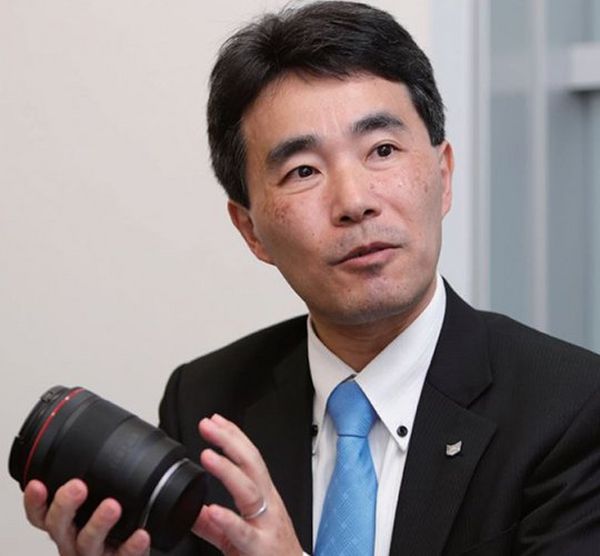
Digital Camera World’s CP+ 2026 coverage notes that Canon executives responded to direct questioning with “a lot of smiles” — and that Canon’s head of product development, Manabu Kato, stated at CP+ 2025: “There is indeed a lot of demand for vintage-looking cameras, and that is not something we are ignoring.” When asked about his personal favorite vintage Canon model, Kato named the AE-1 specifically. That level of specificity in a press context is not incidental.
The timing of a potential announcement is not subtle. April 2026 is the AE-1’s 50th anniversary. Canon has a documented history of using milestone anniversaries as product launch windows. The community has been connecting these dots since at least mid-2025.
What the RE-1 is credibly rumored to be: a full-frame mirrorless body built on Canon’s mid-range platform — reports suggest the 32.5MP sensor found in the R6 Mark III — housed in an AE-1-inspired design with physical dials, retro silhouette, and a shooting experience that prioritizes feel and character over menu complexity. Not a flagship technical statement. A camera with a point of view.
It is worth being precise about what is confirmed versus speculated here: Canon has confirmed nothing. The executive statements are on record. The anniversary timing is real. The rest is community inference, credible and widely shared, but not verified by Canon. Any purchase decision made in anticipation of this announcement carries that uncertainty.
“Manabu Kato named the AE-1 specifically when asked his favorite vintage Canon. That level of specificity in a press context is not incidental.”
What the Nikon Zf Already Proved About This Market
The commercial question — whether there is real demand for a character-driven retro mirrorless at a premium price point — was answered in 2023 when Nikon released the Zf.
The Nikon Zf is a full-frame mirrorless camera built around the visual language of the Nikon FM2, a classic 35mm SLR from the 1980s. Physical dials for shutter speed and exposure compensation. A retro silhouette that deliberately breaks with modern mirrorless design. Industry analysis from Fstoppers noted that the Zf’s sales data revealed significant pent-up demand from photographers who had been waiting for exactly this category of product.
The Zf validated a thesis that had been circulating in the photography community for years: that a meaningful segment of the market prioritizes shooting experience and physical design alongside technical capability. Specifications alone stopped being the complete purchasing argument at some point in the last decade. The Zf proved this commercially, not just anecdotally.
Canon’s position is structurally stronger than Nikon’s was. The Nikon Zf drew on the FM2’s legacy — a respected professional camera with a committed following. The AE-1’s legacy is broader and more culturally embedded. It was the mass-market camera. The one that belonged to professors and parents and people who didn’t identify as photographers but shot anyway. A Canon RE-1 wouldn’t be appealing to a niche. It would be appealing to a generation.
The Original Is Available Now — With Full Context
If Canon announces the RE-1 in April, it will ship as a digital mirrorless with modern internals inside a retro enclosure. That is a different product from the original AE-1. The RE-1 will not shoot film. It will not give you 36 frames per roll. It will not require you to make every exposure count in the same way.
This is not an argument against the RE-1. It is an argument for understanding what you are actually buying in each case. The AE-1 is a film camera. Its constraints are part of its value. Photographers who want to learn exposure discipline, engage with the medium in a physical and committed way, or produce images with the optical character of FD glass on film — those things are available right now, at prices no mirrorless body will match.
The Canon FD lens ecosystem — which the AE-1 uses — is one of the most cost-effective vintage glass systems available to photographers today. The FD 50mm f/1.8 is accessible, sharp, and renders with warmth. The FD 35mm f/2 and 85mm f/1.8 are genuinely excellent lenses available for a fraction of what comparable modern glass costs. None of these lenses are compatible with Canon’s current EF or RF mount natively, but FD-to-mirrorless adapters are widely available and functional.
GearFocus carries Canon AE-1 cameras listed by verified sellers — photographers who actually shot with them, who can describe their condition from direct experience, and who understand what the camera is. The platform also carries Canon FD lenses and the broader film camera inventory needed to build around it. Every seller on the platform is verified. The 48-hour return policy covers any purchase that doesn’t match its description.
The AE-1 has been in continuous use for fifty years. It outlasted the format it was built for, outlasted the company’s own transition to autofocus and digital, and remained relevant through every major disruption the photography industry experienced in the interim. Whether Canon announces the RE-1 in April or not, that track record stands on its own.
Find an original Canon AE-1 from a photographer who knows exactly what it can do — browse Canon AE-1 listings on GearFocus.com.