
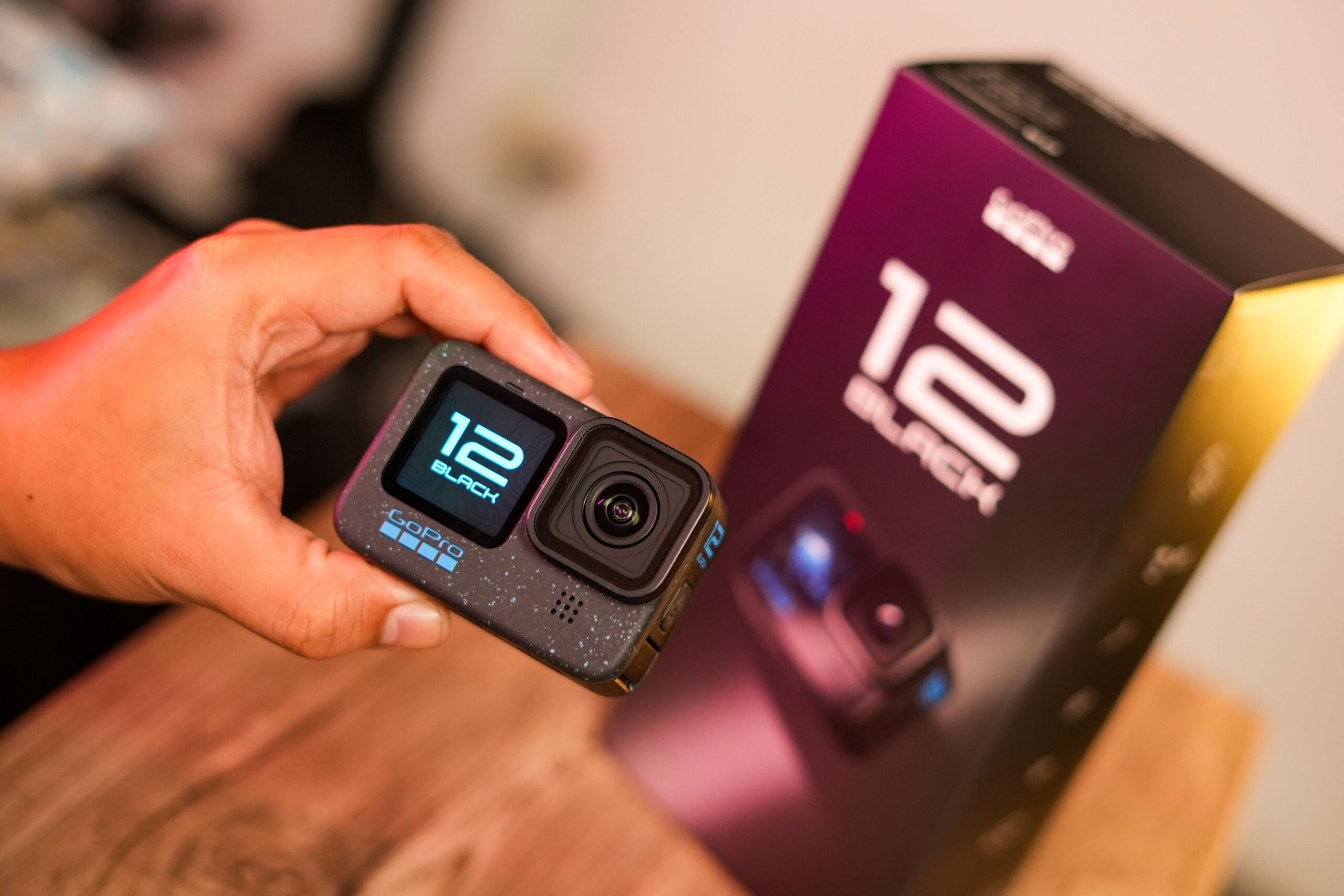
GoPro bankruptcy action cameras is the search phrase of the month because GoPro has agreed to merge with a US data-center technology company, pivoting toward AI to keep its action camera business alive. For creators, the practical stakes are firmware, warranty, accessory supply, and whether you should keep buying into the ecosystem.
The Helmet Mount Doesn’t Care About Quarterly Earnings
Late August, a hillside outside of town, the kind of afternoon where the light goes copper about forty minutes before you’re ready for it. I’m crouched in gravel, elbow bleeding a little, taping a small camera to a mountain bike frame because the official mount cracked two seasons ago and I never replaced it. The rider is impatient. The dust smells like hot pennies. Somewhere in my bag a phone is buzzing with a headline about GoPro bankruptcy action cameras and a merger, and I’m ignoring it because there’s twelve minutes of usable light left.
That’s the honest gap between the business story and the working story. One lives on a stock ticker. The other lives on a piece of gaffer tape.
But those two stories collide eventually. They always do. And the collision is exactly what this piece is about: the news of the GoPro bankruptcy action cameras situation, the AI data-center merger meant to solve it, and what a person who actually shoots for money should do differently starting Monday.
What Actually Happened With GoPro Bankruptcy Action Cameras
Here are the facts, and only the facts. GoPro has agreed to merge with a US company that builds technology for data centers, a move framed as an AI pivot intended to save its action camera business from bankruptcy. That reporting comes from Digital Camera World, published at the start of September 2026.
That’s it. That’s the whole verifiable core of the GoPro bankruptcy action cameras story as it stands right now. Everything else you’ll read this week is interpretation, including mine, and you should treat it that way.
I want to be blunabout something, because photography media has a bad habit here: nobody covering the GoPro bankruptcy action cameras story knows how this ends. Not the analysts. Not the YouTubers with thumbnail arrows pointing at a stock chart. Certainly not me. What we can do is reason carefully about the mechanics of what a merger like this does to a hardware line, and what those mechanics historically mean for the people who bought the hardware.
So let’s do that instead of pretending to prophecy.
Why Does an Action Camera Company Merge With a Data-Center Firm?
On its face it reads like nonsense. Helmet cameras and server racks. But the logic isn’t as strange as the headline makes it sound, and understanding it tells you a lot about the GoPro bankruptcy action cameras endgame.
A struggling hardware company with a recognizable consumer brand has two assets that outlive its product margins: the brand itself, and its position as a publicly traded entity. A company with capital and a growth story but no public listing has the inverse problem. Mergers get built on exactly that kind of complementary need. The action camera business becomes one division inside a larger entity whose valuation story lives somewhere else entirely.
Which is either salvation or slow dilution, depending on who’s writing the operating plan. That ambiguity is the whole reason the GoPro bankruptcy action cameras conversation matters to creators rather than just to shareholders.
Here’s the uncomfortable part. When a hardware line becomes the less exciting division inside a company chasing an AI narrative, the hardware line rarely gets the R&D budget it had when it was the entire company. It gets maintained. It gets milked. Sometimes it gets a genuine second life if the parent decides the brand is worth investing behind. I’ve watched all three outcomes happen in this industry, and I have never once been able to predict which one from the press release.
The Confession: I Bought Into a Dying Ecosystem Once and Told Myself It Was Fine
Years back I went deep on a small-format video system that was clearly wobbling. Batteries, cages, a couple of proprietary mounts, a workflow built around one manufacturer’s app. I told myself the gear worked, which was true, and that the company’s problems were financial rather than technical, which was also true. Both of those things can be true while you’re still making a mistake.
What killed me wasn’t the camera failing. The camera was fine. What killed me was the app updates stopping while phone operating systems kept moving, until the transfer workflow I’d built my turnaround times around simply stopped functioning on a client’s deadline day. I had to shoot, pull cards, and hand-transcode on a laptop in a hotel room until 3am. That’s the actual shape of ecosystem risk. Not a dead camera. A dead workflow.

So when I look at the GoPro bankruptcy action cameras news, I’m not asking whether the cameras will keep recording. They will. I’m asking about everything around the camera that only exists because a company is paying engineers to maintain it.
What Should Working Creators Actually Watch in the GoPro Bankruptcy Action Cameras Story?
Forget the stock price. Here’s the watchlist that affects your invoices. These are the signals I’d track over the next two quarters, in rough order of how fast they’d change my behavior.
- App and firmware cadence: Are updates still shipping on a normal rhythm, or has the pace gone quiet? Software neglect is the first symptom of a deprioritized hardware division, and it hits your workflow before it hits your gear.
- Cloud and subscription terms: Any change to storage tiers, feature gating, or pricing is a signal about how the new parent views recurring revenue from the camera line.
- Warranty and repair turnaround: Service is expensive and easy to quietly downgrade. Longer turnarounds or narrowed coverage tell you where the line sits on the priority list.
- First-party accessory availability: Mounts and housings are the sleeper risk. A camera with no housing for your specific application is a paperweight in the rain.
- Roadmap language: Watch for the shift from “next generation” to “continued support.” That’s the vocabulary of maintenance mode.
None of those individually proves anything about the GoPro bankruptcy action cameras outcome. Two or three of them moving in the same direction at once is a pattern, and patterns are actionable.
The Accessory Problem Nobody Talks About
Let’s talk about the least glamorous part of the GoPro bankruptcy action cameras question, because it’s the part that will actually cost you a job.
Action cameras aren’t cameras. They’re mounting systems that happen to contain a sensor. The value of the ecosystem isn’t the imaging pipeline, it’s the fact that a decade of third-party manufacturing has standardized around a particular finger-mount geometry and a particular set of housing dimensions. That standardization is why you can tape a camera to a bike frame with a two-dollar clamp bought in a bike shop in a town you’ve never visited.
That’s an enormous amount of accumulated infrastructure, and here’s the good news buried inside the GoPro bankruptcy action cameras panic: mount geometry doesn’t need a company to survive. The physical standard is out in the world. Third parties will keep making clamps and cages and suction mounts regardless of what happens on a balance sheet, because the demand exists independent of the brand.
The bad news is narrower and sharper. Waterproof housings for a specific body, replacement doors, replacement lens covers, specialized dive cases: those are body-specific, low-volume, and often first-party or near-first-party. If you shoot underwater or in genuinely hostile conditions, that’s where a GoPro bankruptcy action cameras disruption bites first. A generic clamp is fungible. A pressure-rated housing for one exact body shape is not.
If you shoot water work for money, buy your spare housing now rather than next spring. That’s not fear, that’s inventory management.
Should You Stop Buying Into the Ecosystem?
Short answer: no, but change how you buy.
The GoPro bankruptcy action cameras story does not make existing hardware stop working. If a camera does what you need today, at a price that pays for itself inside a few jobs, the corporate structure behind it is close to irrelevant. I’d rather own a well-understood tool from a shaky company than a mystery tool from a healthy one.
What changes is your depreciation math. Buying new at full retail assumes a multi-year support horizon that the GoPro bankruptcy action cameras news makes less certain. Buying used at a discount already prices in that uncertainty, and you can absorb an abandoned ecosystem much more comfortably when the tool cost you a third of retail.
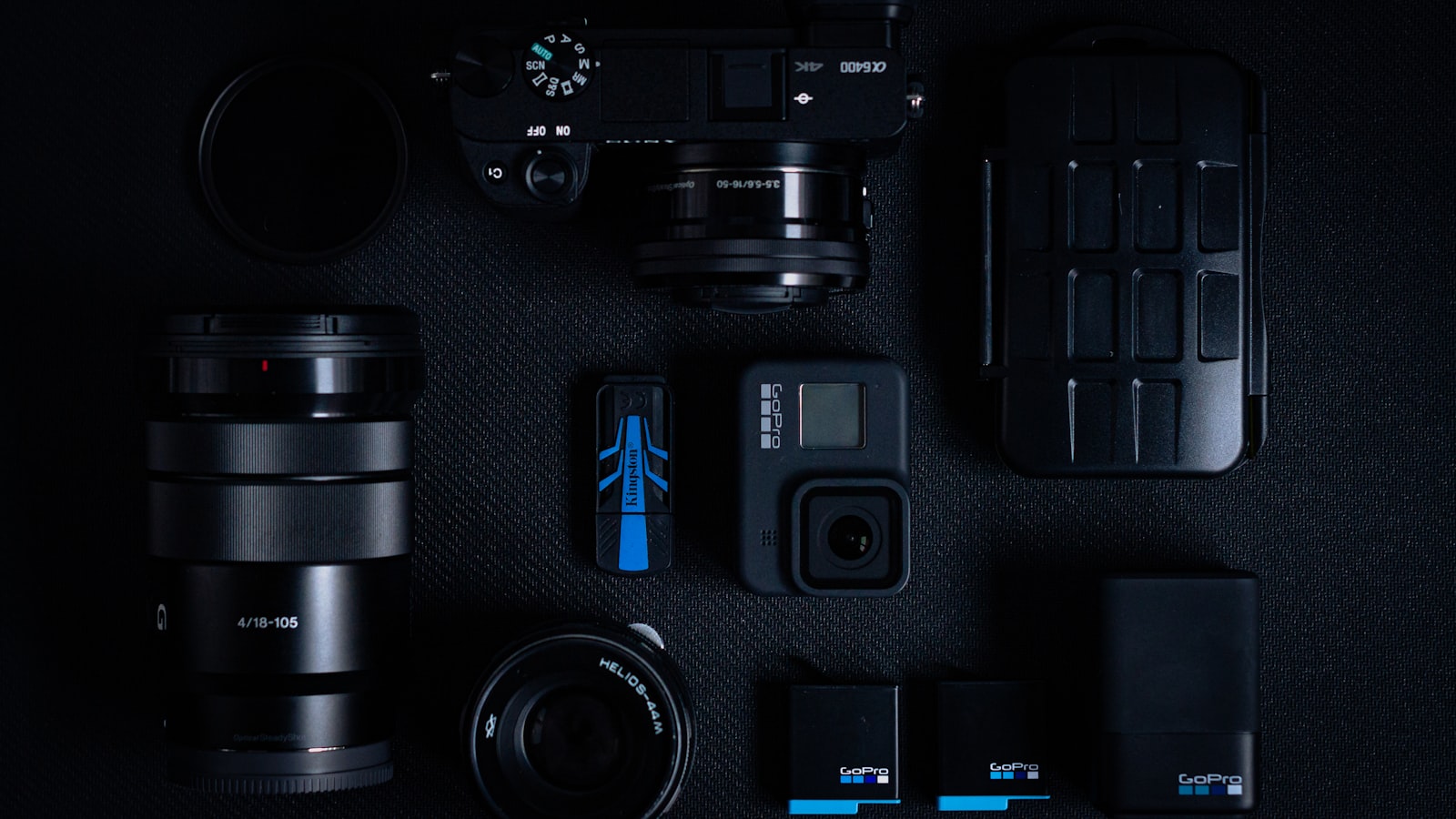
Used action camera prices swing hard on condition and on whether the housing and mounts come with the body, and you’ll see the same generation listed at wildly different money across eBay, forums, and GearFocus depending on what’s in the box. Buy the bundle, not the body. The accessories are the part that’s genuinely hard to replace.
Second Confession: I Judged the Business Story Instead of the Tool
I have a bad habit I’m still working on. When a manufacturer is in trouble, I get snobby about the gear, as if the sensor knows the company is losing money. A few years ago I talked a friend out of a perfectly good purchase from a struggling brand because I’d read too many finance takes that week. She bought the safe option instead, spent more, and hated the ergonomics.
That was me being a business commentator instead of a photographer. The tool was right for her hands and her work. My analysis was correct and my advice was still bad, which is a combination I’d like to stop achieving.
So take everything here about the GoPro bankruptcy action cameras merger as risk framing, not as a verdict on the cameras. The hardware is what the hardware is. Support risk is a separate variable, and you price it, you don’t panic about it.
How Does the GoPro Bankruptcy Action Cameras Story Fit the Broader Industry Pattern?
This isn’t happening in isolation, and that’s the most useful lens on it. The camera industry has spent the last several years in a slow consolidation, and the GoPro bankruptcy action cameras headline is one symptom of a much larger structural shift.
Think about the shape of it. Small-sensor imaging has been steadily eaten by phones, which killed compacts and put permanent pressure on any category that competes with a pocket. Meanwhile the categories that survived did so by being genuinely un-phoneable: interchangeable-lens bodies with real glass, drones that fly, cameras you can bolt to a helmet and drown.
Action cameras sit in a strange middle. They’re un-phoneable in that you won’t strap a flagship phone to a downhill bike. But the margin structure is brutal, the price ceiling is low, and the R&D bill for stabilization and sensor development is not low. That squeeze is the real story behind the GoPro bankruptcy action cameras narrative, more than any single quarter’s numbers.
We’ve covered adjacent versions of this before, and the patterns rhyme. Our earlier look at GoPro’s cash crisis and what working photographers should watch next laid out the financial groundwork this merger responds to. And if you want to see how differently these stories resolve, our piece on whether Nikon will be taken over is a study in how takeover speculation can hover over a brand for years without much changing for the person shooting with it.
The Regulatory Wildcard Sitting Next Door
There’s a factor in the action camera and small-format market that has nothing to do with the GoPro bankruptcy action cameras merger and everything to do with what happens next: policy.
The drone market has spent recent years absorbing serious regulatory turbulence, and that turbulence reshapes buying behavior in adjacent categories. When creators get nervous about whether the aerial platform they depend on will remain purchasable or flyable, they hedge into ground-based capture. Helmet cameras, car mounts, gimbal rigs, chest mounts. Demand shifts sideways.
Our coverage of the DJI drone ban ruling and the follow-on US DJI clone ban both map that dynamic in detail, and it’s worth reading alongside the GoPro bankruptcy action cameras story. A category can get healthier because its neighbor got sicker. That’s not a prediction about how this resolves. It’s a reminder that the demand side of the GoPro bankruptcy action cameras equation isn’t fixed, and a division that looks unattractive today can look strategic in eighteen months if the market moves under it.
Build a Workflow That Survives Any Manufacturer
Here’s the part I actually care about, and it’s the answer to the GoPro bankruptcy action cameras anxiety that doesn’t require you to predict anything.
Every dependency you have on a manufacturer’s software is a loan you took out against your future turnaround time. Some of those loans are worth it. Most aren’t. The fix isn’t paranoia, it’s auditing.
- Stop routing deliverables through proprietary apps. If your only path from card to client runs through one company’s mobile software, you have a single point of failure that a merger can trip. Learn the card-reader-and-NLE path even if it’s slower, so it exists when you need it.
- Shoot in codecs your editor opens natively. Exotic formats that need a first-party converter are fine until the converter stops getting signed for new operating systems.
- Archive the flat files, not the app-processed versions. Your originals should be readable in ten years by software that has nothing to do with the camera brand.
- Keep local copies of firmware installers for the bodies you depend on. Download portals get retired quietly during corporate transitions.
- Standardize on the physical mount, not the brand. The finger-mount geometry is an industry standard now. Build your rigs around it and any compatible body becomes a drop-in replacement.
Do those five things and the GoPro bankruptcy action cameras question stops being existential. It becomes a purchasing question, which is a much better kind of question.
What Working Photographers Get Wrong About Manufacturer Distress
Two errors, and I’ve made both.
The first is panic-selling. Someone reads a GoPro bankruptcy action cameras headline and dumps functional gear into a soft used market at exactly the moment everyone else is doing the same thing. You eat the depreciation on a rumor, then rebuy something similar six months later at a higher price because nothing actually broke. Fear is an expensive trading strategy.
The second is the opposite: doubling down out of loyalty. Buying more of an ecosystem specifically because you feel bad for the company, or because you’ve already sunk money into it. Sunk cost is not a purchasing rationale. It’s a feeling with a spreadsheet taped to it.
The middle path is unglamorous. Keep shooting what works. Buy used where the ecosystem risk is real. Diversify your mounts and your codecs. Reassess in two quarters when there’s actual information instead of a merger announcement. The GoPro bankruptcy action cameras story will look completely different by spring, and you’ll have lost nothing by waiting.
What This Means for Different Kinds of Shooters
The GoPro bankruptcy action cameras risk isn’t uniform. It scales with how deep your dependency runs.
Wedding and event shooters using a small camera as a B-cam or a cheeky ceremony angle: near-zero exposure. You’re using it as a generic wide camera. Any brand does that. Carry on.
Sports and adventure specialists with a dozen bodies, a rack of housings, and a client-facing workflow built on the manufacturer’s app: this is where the GoPro bankruptcy action cameras question is a real business risk. Audit your software dependencies this month. Buy spare body-specific housings while they’re on shelves.
Underwater and industrial shooters: highest exposure of all, because your housings are body-specific, pressure-rated, and low-volume. Stock up. This is the one category where I’d act before more information arrives rather than after.
Content creators and vloggers whose output is phone-delivered social video: low exposure, high substitutability. The market has plenty of competent alternatives at every price point, and switching costs you a mount adapter and an afternoon.
What to Take From This
- The confirmed fact is narrow: GoPro has agreed to merge with a US data-center technology company in an AI pivot aimed at saving its action camera business from bankruptcy. Everything beyond that is interpretation.
- Your cameras won’t stop working. Ecosystem risk in the GoPro bankruptcy action cameras story shows up as dead workflows and unavailable housings, not dead sensors.
- Watch five signals: firmware cadence, subscription terms, repair turnaround, first-party accessory stock, and roadmap language shifting from “next generation” to “continued support.”
- Buy used, buy bundled. The used market already prices in uncertainty. Accessories are the hard-to-replace part, so buy the box, not the body.
- Mount geometry is the durable asset. The finger-mount standard outlives any single company. Build rigs around it and bodies become interchangeable.
- Stock body-specific housings now if you shoot water or industrial work. That’s the one category worth acting on before more information lands.
- Don’t panic-sell and don’t loyalty-buy. Both are emotional trades dressed up as strategy.
The Gaffer Tape Verdict
Back on that hillside in August. We got the shot. The taped-on camera survived four runs and a crash that put a scuff across the lens cover, and the client never asked what brand it was, because clients never do. They asked whether the footage cut together. It did.
That’s the thing worth remembering as the GoPro bankruptcy action cameras coverage escalates over the coming months. Corporate structure is real, and support risk is real, and both deserve a place in your purchasing decisions. But neither of them is the craft. The craft is knowing where to put the camera, and having a workflow robust enough that it doesn’t matter whose logo is on the body.
Audit your dependencies. Price in the risk. Buy used where it makes sense and buy spares where it matters. Then stop reading merger analysis, including this piece, and go put a camera somewhere nobody’s put one before. The GoPro bankruptcy action cameras story will resolve however it resolves, and the photographers who thought about workflow instead of headlines will barely notice.
FAQ
Is GoPro going bankrupt?
GoPro has agreed to merge with a US data-center technology company in an AI pivot reported as an effort to save its action camera business from bankruptcy. The merger is the response to that risk, not confirmation of a filing.
Will my existing action camera stop working?
No. Hardware keeps recording regardless of corporate changes. The realistic GoPro bankruptcy action cameras risks are firmware and app support ending, warranty service slowing, and body-specific housings becoming hard to source.
Should I sell my gear now?
Panic-selling functional gear into a market where everyone else is selling the same week usually costs you money. If the camera earns its keep on current jobs, keep shooting it and reassess when real information arrives.
Are third-party mounts affected?
Generic clamps, cages, and suction mounts built around the standard finger-mount geometry should continue regardless. Body-specific waterproof housings, doors, and lens covers are the genuinely vulnerable category, so buy spares if you shoot water work.
Is it safe to buy an action camera in 2026?
Yes, with adjusted math. Buy used where discounts already price in support uncertainty, prefer bundles that include mounts and housings, and avoid workflows that depend entirely on one manufacturer’s mobile app.
What single step reduces my risk most?
Learn a card-reader-to-editor workflow that never touches proprietary software. Every dependency on a manufacturer’s app is the part of the GoPro bankruptcy action cameras situation most likely to interrupt a paying deadline.
Photo: Kenneth Surillo